


By Mongolianstar Adventures Travel Design Team — itinerary architects, Mongolianstar Adventures
Mongolia in winter works best in three areas: the Ulaanbaatar-region parks around Terelj, Central Mongolia's monastery-and-steppe corridor, and — with carefully shortened stages — the Gobi Desert. The far west and remote lake camps are where winter distances and closed camps make routing impractical. As the Travel Design Team, this is the question we answer most from late October onward, when we switch to winter-designed itineraries. This guide walks you through our region-by-region assessment, how the cold season reshapes route design, and which collection style — curated or tailor-made — fits the journey you have in mind.
Winter routing at a glance
- Our winter season runs November to March; winter departures are designed bespoke, with every overnight confirmed for your dates.
- Strongest winter regions: Terelj and the Ulaanbaatar area, Central Mongolia, the northern lake country on a dedicated winter route, and a carefully routed Gobi.
- Short daylight means shorter driving days, fewer sites per day, and a built-in rest day — never two long driving days back to back.
- Two published winter journeys anchor the choice: Winter Wonders & Ice Festival (8 days, north) and Winter in Central Mongolia (10 days, centre).
- Higher-comfort accommodation and 24-hour trip assistance matter more in winter than at any other time of year.
Mongolia in winter: which regions actually work?
We plan winter around what stays open, what stays warm, and what can be reached comfortably before dusk. Here is how we assess each region on our destinations map.
Northern Mongolia: frozen rivers and the lake country
Northern Mongolia transforms in winter. Rivers that ran green all summer freeze into pale corridors between frost-laden taiga, and Khuvsgul Lake becomes a vast white plain. Access is more limited than in summer — snow and ice are possible on northern roads — so we route the north only on a purpose-built winter itinerary with longer transfer legs planned deliberately, not squeezed between activities.
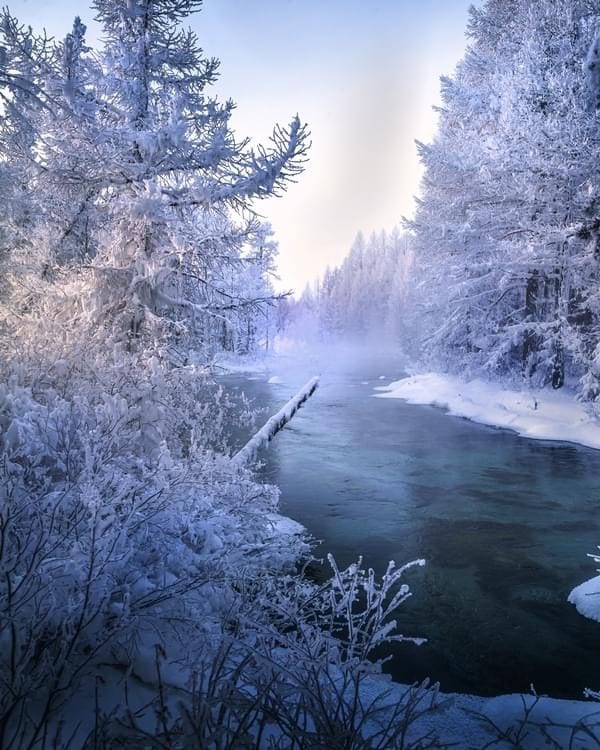
Our published northern winter journey, Winter Wonders & Ice Festival (8 days / 7 nights), strings together dog sledding along the frozen Terelj River, Amarbayasgalant Monastery, a nomadic family visit, Ar Bosgot Canyon, Jargalant Lodge, and the Blue Pearl Ice Festival on frozen Khuvsgul Lake. It sits in our "5-star hotels and camps" tier. Prices vary with departure dates and group size, so we confirm the current per-person rate, single-supplement basis and inclusions when we quote. If the north in summer already interests you, our Khuvsgul Lake planning guide gives the warm-season context this winter route reimagines.
Terelj and the Ulaanbaatar area: the easiest winter base
The parks around Ulaanbaatar are where winter routing is simplest. Driving days around Terelj and Khustai in our published winter itineraries are a half-day transfer at most — short enough to leave real time outdoors and still reach a heated room well before dark. That proximity also gives us flexibility: if weather closes in, a hotel night in the capital region is usually a realistic fallback — we identify it when we build the route and confirm it for your dates. For families or first-time winter visitors, we usually anchor the journey here.
Central Mongolia: monasteries, wild horses and hot springs
Central Mongolia suits winter particularly well because its highlights pair naturally with warmth. Our Winter in Central Mongolia journey (10 days / 9 nights, "5-star hotels and ger camps" tier) combines the Chinggis Khaan Statue Complex, dog sledding in Terelj, skiing at Sky Resort, wild Przewalski's horses at Khustai, the spa and hot springs of Khan Khujirt Wellness Resort, and historic Kharkhorin. Prices vary with departure dates and group size; we confirm the current per-person rate, single-supplement basis and inclusions when we quote. Soaking in a hot spring after a morning on the snowy steppe is, in our view, one of the cold season's quiet pleasures.
The Gobi: possible, but only on a winter-designed route
The winter Gobi is a different desert — snow dusts the dunes, and the silence deepens. It is also the region that demands the most care. January and February nights in the Gobi are severe — we plan every stage around hard frost after dusk — and not every camp stays open or every road stays passable. For winter Gobi nights we confirm heating, hot water and dining arrangements with each camp for your specific dates before we commit the overnight, and we shorten the driving stages accordingly.
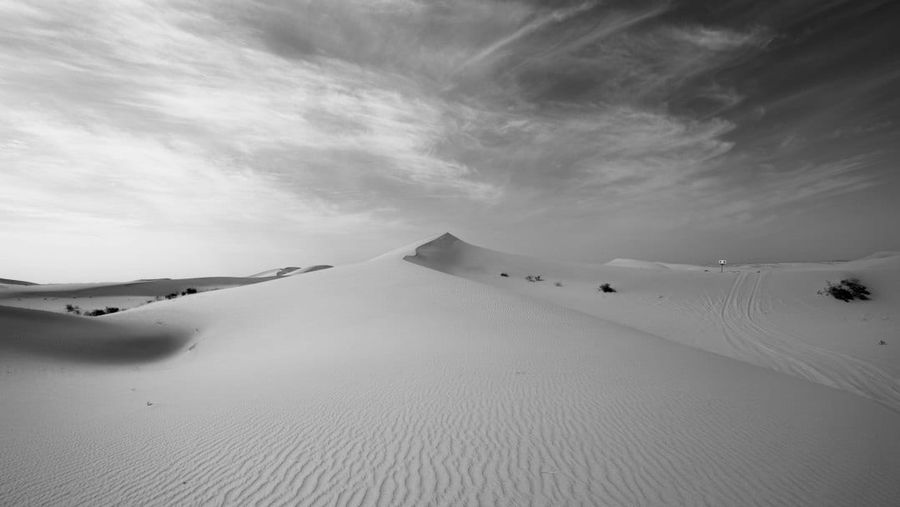
This is exactly the terrain our winter & autumn itineraries are built for: cold-season routing with the same all-inclusive support as our summer journeys. It suits returning travellers, photographers, and anyone comfortable with cold and shorter days.
Where we don't route in winter — and why
For Western Mongolia and the remote lake camps of the deep north and eastern steppe, we weigh three things before committing a winter route: the distance between confirmed overnight stops, whether camps in that corridor operate at all in the cold months, and how much daylight remains for the drive. When those factors stack up — long legs, sparse open camps, early dusk — we advise saving the region for the core season rather than compressing it into a rushed winter crossing. That is a routing judgement we make journey by journey, and we will tell you plainly when a region is better waited for.
Winter is a bespoke season
Our core season runs mid-May to mid-October. From late October we design winter itineraries, and every winter departure is shaped around your dates — with each overnight confirmed in advance, because many ger camps close for the season.
How does winter change the way we design a route?
Winter routing is not a summer itinerary with warmer rooms. The whole skeleton changes.
Shorter days, shorter stages
Short daylight limits daily distances, so we plan fewer sites per day and shorter driving legs. Driving days as planned in our published winter itineraries (approximate, road conditions permitting):
| Route element | Typical winter driving day | What it means for you |
|---|---|---|
| Ulaanbaatar area (Terelj, Khustai) | A half-day transfer at most | A relaxed morning start, real time outdoors, arrival well before dusk |
| Northern transfer legs (toward Erdenet/Murun) | A full dedicated driving day | Dedicated transfer days, planned as drives — not activity days |
| Winter Gobi stages | Shortened from summer routings | Every overnight confirmed; no leg planned on an unverified camp |
Region × month routing matrix. Our planning guidance for the cold season, not an availability guarantee — every overnight is confirmed for your dates before we commit it.
| Region | November — routable? | December–February — routable? | March — routable? | Typical overnight type | Best-fit collection or bespoke |
|---|---|---|---|---|---|
| Ulaanbaatar & Terelj | Yes | Yes | Yes | Hotel nights in the capital; camp or lodge near Terelj, confirmed for your dates | Any collection with a Terelj base; Family Collection styling with children |
| Central Mongolia (Khustai, Kharkhorin, Khan Khujirt) | Yes | Yes | Yes | Hotels and the Khan Khujirt resort, with any camp night confirmed individually | Winter in Central Mongolia; Deluxe or Signature comfort, or bespoke |
| Northern lake country (Khuvsgul) | Purpose-built winter route only | Purpose-built winter route only | Purpose-built winter route only | Hotels and lodges on the published route | Winter Wonders & Ice Festival; bespoke if you want to add regions |
| Gobi | Yes, shortened stages | Yes, with the most care | Yes, shortened stages | Camps confirmed property by property for your dates | Bespoke cold-season routing (our winter & autumn itineraries) |
| West, east and remote lake camps | Core season advised | Core season advised | Core season advised | Too few confirmed cold-season stops to plan around | Save for the core season; ask us before committing |
The pacing rule that matters most in the cold
Our standard pacing rule applies year-round: build in a rest day, and never schedule two long driving days back to back. As daylight shortens, that rule stops being a comfort preference and becomes the backbone of the plan. A rest day near Ulaanbaatar or at a hot-spring resort also gives the itinerary somewhere to absorb a weather delay without losing a highlight.
Why buffer days are not optional
Mongolian winters can turn severe and genuinely unpredictable. In the 2023–2024 dzud — the extreme winter condition that combines deep cold with livestock-threatening snow and ice — livestock losses were severe, as documented in World Bank reporting on Mongolia (2024). We cite that not to alarm you, but to explain our design philosophy: conditions can change overnight, so winter routes carry buffer time, confirmed fallback overnights, and round-the-clock local support built in from the first draft.
An illustrative 8-day winter skeleton
Illustrative routing example — not a client itinerary and not a published departure. It shows how we pace a cold-season week: no two long driving days back to back, one rest day built in, and every overnight confirmed with the property for your dates.
- Day 1 — Ulaanbaatar: arrival, hotel night, gentle city orientation at your pace.
- Day 2 — Ulaanbaatar to Terelj: half-day transfer, winter walk and dog sledding; camp or lodge confirmed for your dates.
- Day 3 — Terelj: no transfer at all; a full day outdoors and a second night in the same room.
- Day 4 — Terelj to Khustai: half-day transfer; wild Przewalski's horses on the snowy steppe.
- Day 5 — Khustai to Khan Khujirt: a driving day across the open steppe, ending at the hot springs.
- Day 6 — Khan Khujirt: rest and buffer day at the resort — no driving, hot springs, and room to absorb a weather delay.
- Day 7 — Khan Khujirt to Kharkhorin: short transfer and the historic monastery site.
- Day 8 — Kharkhorin to Ulaanbaatar: one full dedicated driving day, then a capital hotel night or your onward departure.
Which collection style and comfort level fits a winter journey?
Start with the two published winter journeys
If your dates are flexible, the simplest path is one of our two winter-designed routes — the northern Winter Wonders & Ice Festival or Winter in Central Mongolia. Both are published in our "5-star hotels and camps" / "5-star hotels and ger camps" accommodation categories — our own tier labels, not official hotel star ratings. They reflect how we think about winter comfort: a warm room confirmed for your dates is the foundation, not an upgrade.
How the collection tiers translate to winter
All of our collections are private and all-inclusive with 24-hour trip assistance. The difference that matters most in the cold season is accommodation:
- Standard Collection — comfortable, well-run camps chosen for the core season; for deep-winter dates we check each property's heating and hot water before recommending it, and tell you plainly what we find.
- Deluxe and Signature Collections — higher-category hotels and camps, which is the accommodation standard we look for first when we plan winter nights. We confirm heating and hot water property by property for your dates. Our ger camp comfort guide explains what separates the tiers night by night.
- Winter & autumn itineraries — a seasonal grouping rather than a separate collection: cold-season routing with the same all-inclusive support as our summer journeys, and the natural home for a winter Gobi journey.
- Family Collection styling — for travellers with children, we lean toward the Ulaanbaatar-area base, short driving days and hotel-backed overnights; tell us your children's ages and we will pace accordingly.
Rather than prescribe one tier for every winter traveller, we match the tier to your route: a Terelj-based week asks less of a camp than a Gobi crossing in January. If you are still weighing collection styles generally, our collection chooser guide covers the full range.
When a tailor-made winter route is the right call
Choose a bespoke journey when your dates fall outside the published departures, when you want to combine regions — say, a Central Mongolia loop with two Gobi nights — or when your pace, interests or group needs differ from the templates. Because we confirm every winter overnight for your dates anyway, a tailor-made route goes through exactly the same confirmation process as a published departure. Tell us your window and your must-sees; we will tell you honestly what fits and what should wait for summer.
See cold-season routes we have already designed
Browse the carefully routed Gobi itineraries built for November-to-March conditions, with the same all-inclusive support as our summer journeys.
Explore our winter & autumn itinerariesWhat happens when winter weather changes the plan?
This is where local relationships earn their keep. Three systems work together on every winter journey we design:
- Winter-equipped vehicles and drivers — winter-experienced local drivers and vehicles prepared for frozen roads, and we agree check-in points and fallback overnights for stretches without mobile coverage.
- 24-hour trip assistance, year-round — especially valuable in winter, when conditions can change overnight. Someone who knows your route is always reachable.
- In-trip flexibility — because your itinerary is private, days can be reordered, a ger camp night swapped for a hotel, or a driving leg shortened while you keep travelling. Our local coordination handles the calls; you keep the journey.
As a women-led, entirely Mongolian team with more than ten years of local travel expertise and membership in the Mongolia Tourism Association, we book winter overnights with suppliers we work with year-round, and we re-confirm heating, water and staffing with each of them for your winter dates rather than assuming summer standards carry over. Those long-standing supplier relationships are the real reason a winter route holds together when the weather does not.
Is winter a good time to visit Mongolia?
We plan winter journeys from November to March: cold, quiet and distinctive — a different experience rather than a substitute for summer. We recommend winter chiefly to travellers comfortable with short days and severe cold — returning visitors and photographers especially — and we design every overnight around that cold.
Can I visit the Gobi Desert in winter?
Yes, on a winter-designed route. January and February nights in the Gobi are severe — we plan every stage around hard frost after dusk — and not every camp stays open or every road stays passable.
Do ger camps stay open in winter?
Many close for the season, so a summer camp list is not a winter one. For winter Gobi nights we confirm heating, hot water and dining arrangements with each camp for your specific dates before we commit the overnight, and we shorten the driving stages accordingly.
Which winter tour should a first-time winter visitor choose?
We usually point first-time winter travellers toward the Ulaanbaatar area and Central Mongolia — shorter driving days, hotel-backed overnights, and highlights like Terelj dog sledding, Khustai's wild horses and the Khan Khujirt hot springs. The northern ice-festival route is wonderful too, but its longer transfer legs suit travellers happy with dedicated driving days.
Can a winter itinerary change once I am travelling?
Yes. Because every journey is private, we can reorder days, swap a ger camp night for a hotel, or shorten a driving leg when conditions require it. Our 24-hour trip assistance and local coordination arrange the changes while you continue travelling.
Ready to plan a winter journey?
Winter Mongolia rewards the traveller who plans with the season rather than against it: the right regions, honest driving distances, warm rooms confirmed in advance, and a local team awake to every change in the weather. Tell us your dates and what you hope to see, and we will design the cold-season route that fits — or tell you candidly which dreams are better saved for summer.
Let's design your cold-season route
Share your travel window, group and interests, and our Travel Design Team will reply with a winter routing proposal built around confirmed overnights and full 24-hour support.
Start your winter inquiry


