


The best time to visit Mongolia is mid-May to the end of October, when weather is most favourable and travel conditions are at their most reliable — but there is no single best month for the whole country. The right window depends on which landscape you want: the Gobi rewards autumn light, Khuvsgul Lake opens up in high summer, and the steppe greens earliest in late spring. This guide gives you the planning framework we use as a design team: a month-by-month overview, a season-by-region matrix, and the pacing logic that turns a chosen window into a route that actually works.
Key points
- The core travel window runs mid-May to late October; outside it, journeys need winter-designed routing.
- Match the month to the region: Gobi in September–October, Khuvsgul in July–August, Central Mongolia across the whole core window.
- Northern lake country closes first in autumn; Gobi camps begin closing in late October.
- Season changes pacing, not just scenery — summer's long days let two-region routes breathe; shoulder months need buffer days.
- Fixed dates are workable: tell the design team your window first, and we build the route around it.
When Is the Best Time to Visit Mongolia?
Our FAQ answers this directly: mid-May to the end of October, when weather is most favourable and travel conditions ideal. Within that window, each stretch rewards something different. May into early June brings fresh green landscapes and fewer travellers, though May can be slightly windy. June to August is the warm, most popular high season. September and October deliver crisp air, autumn colours and thinner crowds.
Outside the core window, Mongolia does not close — it changes character. Spring (March–April) is when newborn livestock appear around the camps, but the weather is unpredictable. Winter (November–March) is cold but unique, with clear skies and a stillness summer never offers.
Why does the answer depend so much on where you go? Because Mongolia's tourism season is genuinely pronounced — a World Bank report from 2021 describes seasonality as a structural feature of the sector, limiting annual hotel occupancy to around 30%. In our own routing work, that seasonality arrives at different times in different regions: thaw, camp operating seasons and reliable road surfaces do not sync up nationwide. A date that is perfect for the Gobi can be a week too early for the northern lakes.
Mongolia's Travel Seasons Month by Month
| Period | What it rewards | What to plan around |
|---|---|---|
| March–April | Newborn livestock around herding camps; raw, empty landscapes | Unpredictable weather; April is the hardest month for Gobi routing (wind, dust, thawing tracks); soft or impassable roads into Khuvsgul |
| May–early June | Fresh green steppe, fewer travellers, noticeably easier journeys from late May | May can be windy; northern roads still improving with some soft sections |
| June–August | Warm high season; long days; fully operational ger camps; most reliable northern roads | Summer rain in the north calls for a buffer day; the most popular period, so book ahead |
| September–October | Crisp air, autumn colours, honeyed low light in the Gobi, thinner crowds | Khuvsgul access becomes variable from October; Gobi camps begin closing in late October |
| November–March | Clear skies, deep quiet, a genuinely different Mongolia | Deep cold and short daylight; snow and ice possible on northern routes; needs a winter-designed itinerary |
We deliberately do not publish month-by-month temperature or daylight tables — conditions vary by region and year, and a single national number would mislead you. Ask us for current conditions and camp availability for your specific dates instead.
Which Season Suits Which Region?
This is the heart of the framework. Each region below links to its page on our destinations hub, where you can explore the landscapes in depth.
| Region | Strongest window | Why the match works |
|---|---|---|
| Southern Mongolia / Gobi | September–October | Crowds thin after the first week of September; light turns low and honeyed; temperatures suit open-air lunches and cool nights. Camps begin closing in late October, so desert extensions must finish before shutdowns |
| Central Mongolia | Late May–October | Loops work well with flexible pacing even in spring; a fuller Orkhon Valley itinerary fits comfortably into three or four days in summer, while autumn routes carry less |
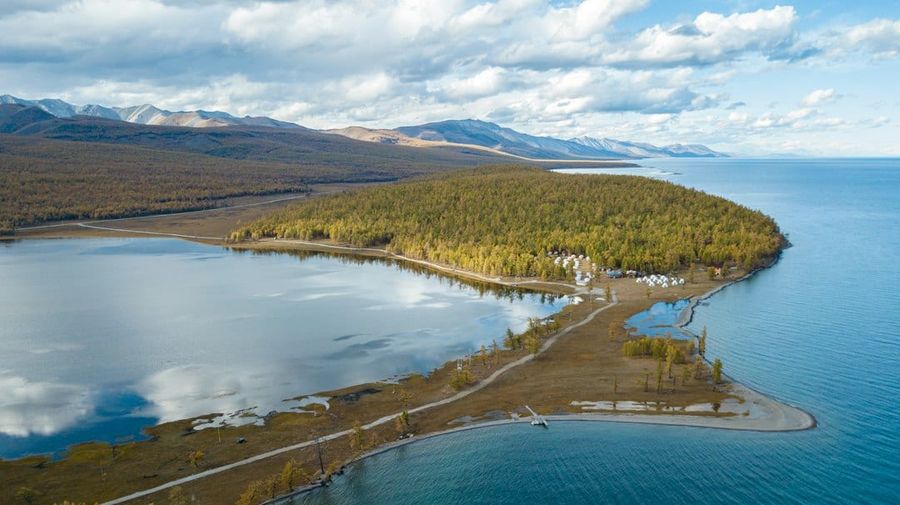
| Northern Mongolia / Khuvsgul | June–September, ideally July–August | Ger camps fully operational and the grassland crossing most predictable; roads dry and firm in midsummer, good in September with early frost on higher ground |
| Western Mongolia / Altai | Plan within the core window; confirm current access | Adding the Altai calls for two weeks or more; we confirm camp operating dates and mountain access for your exact dates before proposing a route |
| Eastern Mongolia | Plan within the core window; confirm current access | The Menen Steppe, Onon River and Khentii mountains — Chinggis Khaan's homeland — reward unhurried steppe travel; we check current camp availability for your window |
Why the North and the South Peak at Different Times
The pattern is worth understanding, because it explains most date conflicts we resolve. Khuvsgul sits high and north: roads into the region can be soft or impassable during spring melt, improving from late May into June, and our northern routing notes flag snow and ice as possible from October. That is why our autumn planning routes lake journeys in September and switches to winter-designed itineraries from October.
The Gobi runs on the opposite logic. Its constraint is not thaw but heat management and camp seasons — and its reward is autumn's low, warm light. Our Gobi season guide walks through that month by month; the short version is that September and early October are the design team's recommended window, with every camp's operating dates confirmed before we commit a route.
Shoulder months are a trade, not a discount
In our experience, June–August is the busiest stretch and the shoulder months either side feel quieter — but that quiet comes with conditions to manage: wind in May, early frost in the north in September, camp shutdowns in the desert in late October. We treat shoulder-season journeys as fully supported designs with buffer days, not as summer itineraries with fewer people.
For a deeper look at either shoulder, see our spring planning guide and autumn planning guide.
How Does Season Change Routing and Pacing?
A common assumption is that changing your dates simply changes the scenery. In our design work, it changes the route itself — the sequence of regions, the length of driving days, and where buffer days sit. Consider how the same journey reshapes across the year:
- Summer's long days make distance feel generous. We consider ten days tight even for a Gobi-plus-Central combination; a full two-region journey typically needs 12 to 14 days, and adding the Altai calls for two weeks or more. In high summer, those durations feel comfortable rather than gruelling — there is daylight left after the drive for the moments you came for. Our 14-day itinerary guide shows how that sequencing works.
- Spring compresses ambition. April is the hardest month for Gobi routing — wind, dust and thawing tracks — so we build buffer days and stay closer to paved roads. Central Mongolia loops work well with flexible pacing, and late May offers a noticeably easier, greener journey. Before including Khuvsgul in any spring proposal, we check current access.
- Autumn reorders the map. The north closes first, so a September journey that wants both lake and desert does the lake early and finishes in the Gobi's golden window — always timed so desert camps are still open.
- Even within one region, season sets the load. Our Orkhon Valley routing carries more in summer and less in autumn: the fuller circuit of Kharkhorin, the waterfall, a family day and Tuvkhun monastery fits into three or four summer days, while autumn versions are leaner.
Buffer days are design features
Summer rain in the north and soft sections on late-spring roads are normal, not emergencies. We place a buffer day where the route is most exposed, so a slow crossing shifts a schedule rather than breaking it — backed by 24-hour trip assistance throughout.
What About Winter?
Winter travel is possible, and some travellers love it — clear skies, silence, a landscape stripped to essentials. But it demands a differently designed itinerary, not a summer route in colder clothes. Mongolian winters can be severe: a World Bank study published in 2012 records that the 2009–2010 dzud — an extreme winter disaster — killed about 8.5 million livestock, roughly 20% of the national herd, and affected 769,000 people, 28% of Mongolia's population at the time. That history is why winter proposals from our team start from scratch: shorter legs, confirmed heated accommodation, and routing that respects deep cold and short daylight.
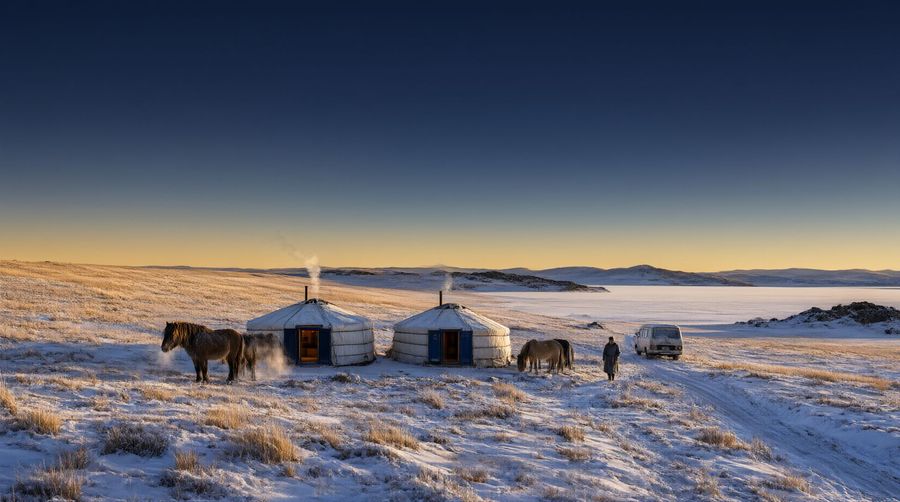
One spring note for animal lovers: in our experience, March and April are when newborn livestock are most often around the camps. Timing, region and herding families' movements all matter, so we treat it as a possible highlight — never a promise.
How Do You Align Your Season with a Collection or a Tailor-Made Route?
Once you have a window and a region, the next decision is the shape of the journey. Our curated collections — Signature, Deluxe, Festival, Explorer, Family and Standard — differ mainly in comfort level, pace and depth rather than in season; if you are weighing them, our collection chooser guide compares them side by side, and first-time visitors can start with our first-timer collection recommendation.
What the season determines is which regions and how many days fit inside your chosen collection's style. A practical way to work through it:
- 1
Pick the landscape first — dunes, lake country, steppe or mountains. Browse the destinations hub and let the scenery choose your season, not the other way round.
- 2
Check your window against the region matrix — if your fixed dates and dream region conflict, we will tell you honestly and propose the closest alternative.
- 3
Set a realistic duration — allow 12 to 14 days for two regions, two weeks or more with the Altai, and add a buffer day for shoulder-season routing.
- 4
Choose your comfort and pace — select the collection that matches how you like to travel, or go bespoke if your dates, interests or pace need a custom design.
- 5
Send us your fixed constraints — exact dates, party size, children's ages, must-see landscapes and any mobility considerations. We confirm current camp availability and road access before proposing anything.
If your dates are immovable — school holidays, leave windows, a milestone birthday — say so at the start. As a women-led local team with over ten years of routing experience, we would rather redesign a route around your calendar than sell you a window that fights it. Every proposal is checked against current camp operating dates and regional access, and every journey travels with 24-hour assistance.
Let the landscape pick your season
Browse Southern, Central, Northern, Western and Eastern Mongolia side by side, then come back to the matrix above with a shortlist.
Explore the regionsIs September a good time to visit Mongolia?
Yes — it is one of our favourite windows. The air is crisp, autumn colours arrive, and the Gobi's light turns low and honeyed with thinner crowds after the first week of the month. Plan Khuvsgul early in the month if you want the lake, since northern access becomes variable from October.
Can I visit Khuvsgul Lake in May?
Sometimes, but we check first. Roads into the region can be soft or impassable during spring melt, improving from late May into June. July and August are the most straightforward months, with camps fully operational — we only include the lake in a spring proposal after confirming current access.
When do Gobi desert camps close?
Gobi camps begin to close in late October. We route desert extensions to finish before shutdowns and confirm each camp's operating dates for your specific journey, so ask us for current availability rather than relying on a general calendar.
Is winter travel in Mongolia realistic?
It is possible, with a winter-designed itinerary: shorter driving legs, confirmed heated accommodation and routing built for deep cold and short daylight. Mongolian winters can be severe, so we design these journeys individually rather than adapting summer routes.
Choose the Window, Then Let Us Build the Route
Mongolia is vast, and its seasons arrive region by region — which is exactly why a well-chosen window matters more than a perfect month. Decide which landscape you want, match it to the matrix above, and give your dates room to breathe. When you are ready, send us your window and wish list: we will confirm access, pace the driving days, and design the journey around the season you have chosen.
Tell us your dates — we'll design around them
Share your travel window, party and must-see landscapes, and our design team will reply with a route built for that exact season.
Start planning your journey


