


Yes — you can travel Mongolia in spring: April and May both work, and late May in particular can be a rewarding window. The key is routing: spring rewards shorter, flexible loops through the Gobi and Central Mongolia, while the northern lake country and the high Altai are still thawing out. In this guide we walk through what spring actually feels like on the ground, a region-by-region suitability matrix, the seasonal moments spring makes possible, and which collection styles and paces we recommend — so you can decide whether your dates work before you inquire. For the wider picture of the country's highlights across all four seasons, start with our Best of Mongolia hub.
Spring or summer: which should you choose?
If your dates are flexible and you want green steppe, settled roads and full camp availability, July–August is easier. If you want quiet viewpoints, pastoral life and can accept wind and buffer days, late May is a rewarding choice.
| Factor | Spring (April–May) | Summer (July–August) |
|---|---|---|
| Crowds | Roads and viewpoints feel far quieter — our team's observation, not arrival statistics | Peak season; the busiest window of the year |
| Weather stability | Changeable; wind is the defining feature and nights stay cold | More settled, with warmer days and nights |
| Camp availability | Remote camps open in stages; each stop is confirmed for your dates | Widest choice of operating camps |
| Landscape colour | Winter ochre turning green patch by patch | Green steppe |
| Booking lead time | Often two to three months' notice | Four to six months' notice, especially for festival dates |
Spring in Mongolia at a glance
- Our FAQ puts the classic visiting window at mid-May to end of October; April and early May sit just outside it, and late May sits right at its opening edge.
- Wind is the defining feature of spring — plan around it rather than against it.
- The Gobi and Central Mongolia typically lead our spring routing; Khuvsgul lake country and the high Altai open up later.
- Favour shorter loops, comfortable heated ger camps, and itineraries with buffer days.
- Camp availability is confirmed for your exact dates before we propose a route — nothing is assumed.
What Is Mongolia Actually Like in April and May?
Spring here is a transition, not a settled season. The ground thaws, rivers swell, and the steppe begins its slow turn from winter ochre to green — often patch by patch rather than all at once. Days lengthen quickly. Nights stay cold, and the difference between a warm afternoon and a sharp evening can be considerable. We describe it honestly in our own FAQ: fresh landscapes, but more variable weather, especially wind.
The wind deserves its own paragraph, because it shapes everything about spring routing. Spring is the peak dust-storm season in Mongolia, when frontal cyclones cross the country — which is why we design April routes around wind rather than against it. That is not a reason to avoid spring — it is a reason to design for it. In our April Gobi planning we build extra buffer days into the itinerary and keep the route closer to paved roads where possible, so a windy day reshapes the schedule rather than breaking it.
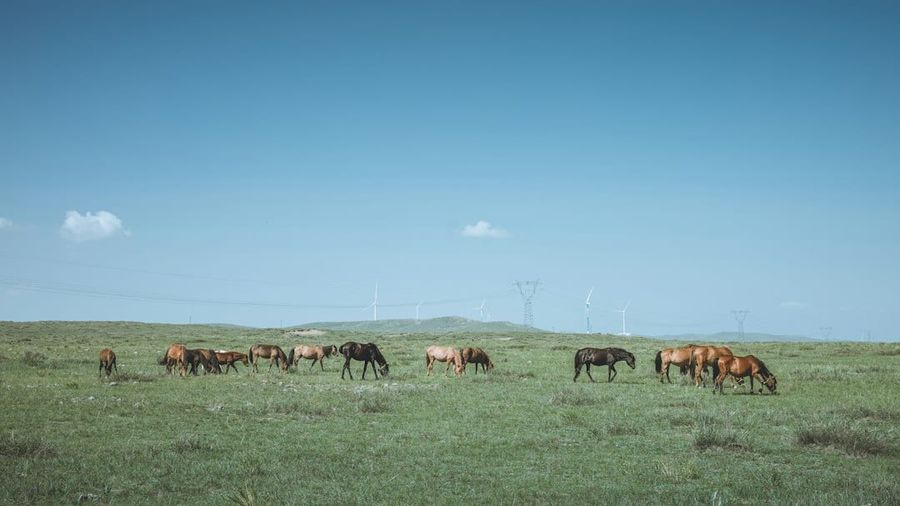
From designing journeys across the country, our impression is that roads and viewpoints feel far quieter in this shoulder window than at the July–August peak, and the light has a clarity summer haze rarely offers. These are our observations, not arrival statistics — but they matter when you weigh your dates.
How does April differ from late May?
More than most travellers expect. In our routing experience, April is the hardest month for Gobi routing: strong northerly and northwesterly winds, dust storms, and soft roads where the ground is still thawing. Late May can be excellent — warm days, cool nights, and steppe edges visibly greening. If your spring availability is flexible, shifting even two weeks later in the season changes the character of the trip substantially.
Which Regions Work Best in Spring — and Which Open Later?
This is the heart of spring planning. Mongolia is vast, and the thaw does not arrive everywhere at once. Here is the matrix we work from when a traveller brings us April or May dates:
| Region | April | May | Routing logic |
|---|---|---|---|
| Gobi Desert (Southern Mongolia) | Hardest month — winds, dust, soft tracks; buffer days essential | Opening gradually; late May can be excellent | Lower elevation dries sooner; route stays near paved roads early in the season |
| Central Mongolia | Workable with flexible pacing | Increasingly comfortable | Closest region to Ulaanbaatar; shorter driving legs make rerouting easy |
| Northern Mongolia (Khuvsgul) | Variable roads; snow and ice possible; limited lake access | Soft or impassable sections during thaw; improving late May–June | Higher latitude and forested terrain hold winter longer |
| Western Mongolia (high Altai) | Not our recommendation for spring | Still early for high-altitude routes | Remote provinces, long distances; an Altai extension suits itineraries of two weeks or more |
| Eastern Mongolia (steppe) | Possible for steppe-focused loops | Greening steadily | Open grassland country; fewer mountain passes to wait out |
A note on how to read this table: these are routing judgements from our own season guides, not guarantees about any given week. Conditions shift year to year, which is exactly why we confirm them close to your dates.
Why do the Gobi and Central Mongolia usually lead?
Two practical reasons. First, geography: the southern desert basin sheds winter earlier than the forested north or the high western ranges, so its tracks firm up sooner. Second, logistics: Central Mongolia sits within easy reach of Ulaanbaatar, which means shorter driving days and more options if weather forces a change. A spring itinerary built around these two regions gives you the widest margin for adjustment — and adjustment is the essence of spring travel here.
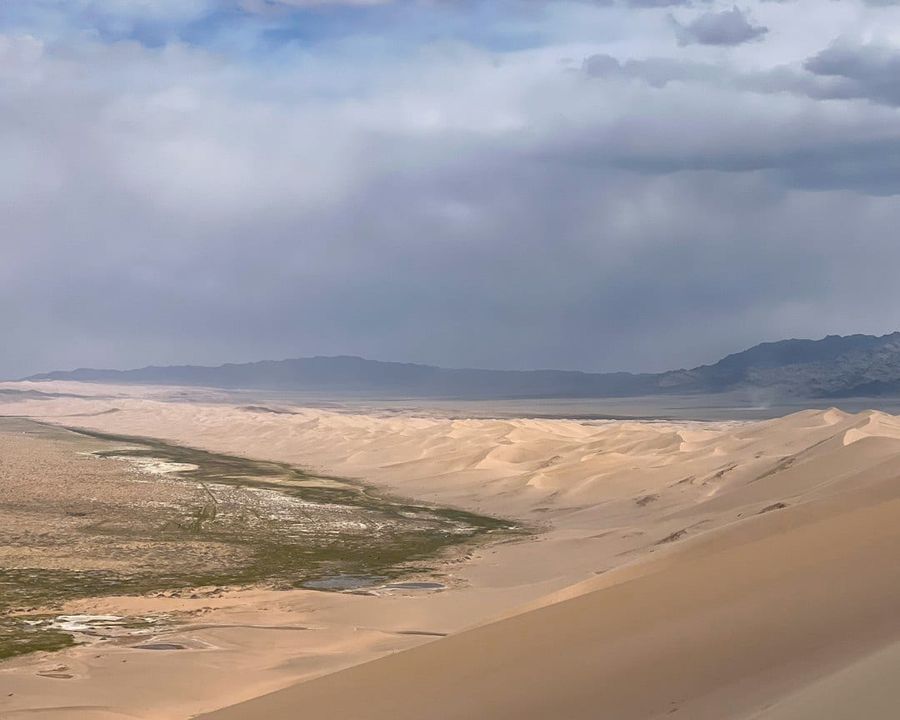
For the Gobi specifically, late May is a different proposition — the dunes under a clearing sky, the steppe edges turning green, camps coming back to life. If the Gobi is your priority and your dates are fixed in early spring, talk to us before committing; sometimes a Central Mongolia loop with a Gobi extension serves the same wish better.
Why do the lakes and the Altai open later?
In our routing experience, October through April is a period of variable road reliability in the north — snow and ice remain possible, and lake access is limited. Roads into the Khuvsgul region can be soft or impassable during the spring thaw. Conditions improve from late May into June, though some soft sections can remain. Western Mongolia adds distance to the equation: the Mongolian Altai rises to 4,374 m at Khuiten Peak in Bayan-Ulgii — the country's highest point — and the western provinces of Zavkhan, Khovd, Gobi-Altai, Uvs and Bayan-Ulgii add long distances between services. An Altai extension is best suited to itineraries of two weeks or more even in good season — in spring, we would generally steer you toward the centre and south instead, and save the west for a later journey.
If your heart is set on Khuvsgul in May
Tell us your exact dates rather than assuming the lake is reachable. Late May can work as roads improve; early May often does not. We would rather shape an honest route than promise a lake you cannot comfortably reach.
What Does Mongolia in Spring Reward You With?
Spring's gifts are different from summer's — quieter, more pastoral, more changeable. We frame all of them as possibilities, never promises, because nature keeps its own calendar.
- Newborn livestock on the steppe. In our experience working with herding families, March and April are when newborn lambs, kids and calves are most often around the camps, and a good time to see nomadic life as families tend their flocks — timing depends on the family's own movements. A well-timed nomadic family visit can coincide with this season of new arrivals; the weather, as the FAQ says plainly, can be unpredictable.
- Migrating birds at wetland stopovers. Mongolia lies on major migratory flyways. A 2024 peer-reviewed review, A Review of the Conservation Status of Shorebirds in Mongolia (PMC), describes the East Asian–Australasian Flyway as a predominant route for shorebirds breeding in Mongolia, with the Central Asian Flyway also contributing, and Mongolian wetlands serving as breeding, resting and refuelling habitat — including during spring migration. For birders, that makes spring wetlands worth building into a route, with sightings always subject to timing and luck.
- Dramatic, changeable skies. Frontal weather is the same force that brings wind — and it brings towering cloud, sudden clearings and extraordinary evening light. For photography-led routes we often favour spring skies: frontal weather brings towering cloud and sudden clearings that summer's settled blue rarely delivers.
None of these are guaranteed sightings or spectacles. They are the seasonal character spring makes possible, and the reason we design spring journeys around flexibility rather than fixed checkpoints.
Which Collections and Paces Fit a Spring Journey?
Spring favours a particular style of travel: private, flexible, comfortably accommodated, and modest in daily distance. Here is how our collections map onto that.
Comfort first: confirmed camps and bedding
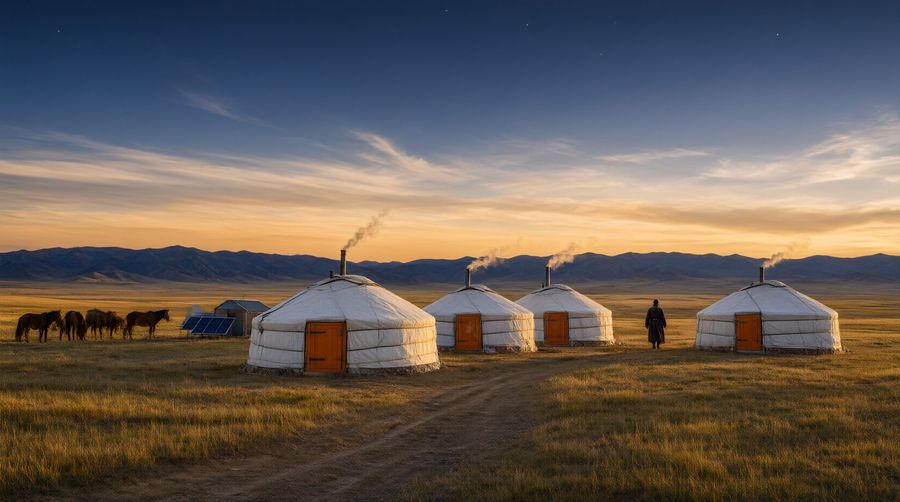
Cold nights make accommodation standards matter more in spring than in July. Bedding is provided at every camp we use; heating varies by camp and by season, so we confirm the heating arrangement at each overnight stop before we propose your spring route. The Deluxe Collection uses premium ger camps, and we confirm the facilities at each camp before proposing your route — a natural fit for travellers who want the landscape without roughing the evenings. The Standard and Explorer collections use simpler ger camps, and we confirm the shower and toilet arrangements at each overnight stop so you can weigh them honestly against April nights.
Shorter loops over ambitious crossings
In spring we design compact loops — a Central Mongolia circuit, or a Gobi route paced with buffer days — rather than cross-country traversals. Our Mongolia itinerary for 10 days is one route shape we can adapt for late-May dates. The Signature Collection's curated structure adapts well when we adjust it privately for spring dates, and families travelling in this window generally do best on a Family Collection-style pace: fewer long drives, more unhurried stops. Whatever the starting point, spring is the season where tailor-made design earns its keep — the route should bend around conditions, not the other way round.
- 1
Share your dates and priorities — tell us whether the Gobi, nomadic life, birding or photography leads your wish list.
- 2
We check real conditions and camp status — camps in remote regions open in stages, so we contact each camp directly to confirm which are operational on your exact dates before we propose a route.
- 3
We propose a routed itinerary with buffers — shorter loops, paved-road bias in early spring, alternatives held in reserve.
- 4
You approve; we confirm everything — accommodation, guides and domestic transport are locked in once the itinerary is agreed.
- 5
We monitor and adjust in real time — our 24-hour trip assistance can reroute, adjust camp bookings or modify the day's timing while you travel.
On lead time: our own planning practice is to recommend four to six months' notice for summer and festival dates, while shoulder-season trips like spring can often be arranged with two to three months' notice. Earlier is still better in spring — it gives us more choice among the camps that open first.
Comparing spring with other seasons?
See how the country's highlights shift across the year on our Best of Mongolia hub — then come back to us with the window that fits your calendar.
Explore Mongolia by seasonWhat Are the Honest Limits of Spring Travel?
We would rather you hear this from us now than discover it on the road. Some camps simply are not open in April, and availability improves through late May. Northern lake access may be off the table entirely in early spring. Wind can compress an afternoon's plans. And no operator — including us — can promise wildlife encounters or calm skies.
What we can promise is process. As a women-led local team with more than ten years of routing experience and membership in the Mongolia Tourism Association, we verify camp operations for your specific dates before proposing anything, and we monitor conditions continuously once you are travelling. When a road softens or a front moves in, the itinerary flexes — a different valley, a reordered day, an adjusted camp booking — with 24-hour assistance behind every change. That is the difference between spring being a gamble and spring being a designed season.
Is April too early to visit Mongolia?
Not too early — but it asks for the right route. April is the hardest month for Gobi routing because of wind, dust and thawing tracks, so we build buffer days and stay closer to paved roads. Central Mongolia loops work well with flexible pacing. If your dates can move, late May offers a noticeably easier and greener journey.
Can I see Khuvsgul Lake in May?
Sometimes, depending on the thaw. Roads into the Khuvsgul region can be soft or impassable during spring melt, with conditions improving from late May into June. Share your exact dates and we will check current access before including the lake in a proposal.
Will I see newborn lambs and calves in spring?
It is one of spring's genuine possibilities — in our experience March and April are when newborn livestock are most often around the camps. Timing, region and the herding families' own movements all matter, so we treat it as a possible highlight of a well-routed visit, never a guarantee.
How far ahead should I book a spring trip?
Two to three months' notice is usually workable for spring — see the lead-time note above for how that compares with summer and festival dates.
Ready to Route Your Spring Journey?
Spring in Mongolia works when the route respects the season: centre and south first, shorter loops, warm gers, buffer days, and a team watching conditions in real time. Tell us your dates and what you hope to see, and we will design around both. Start your inquiry — the conversation costs nothing, and the route you get back will be honest about what April and May can deliver.
Travel dates in April or May?
Send us your window and priorities. We will confirm camp availability, check seasonal road conditions, and propose a private route built for spring — with 24-hour assistance throughout.
Plan my spring journey


