


The right time to visit Mongolia depends less on the calendar than on what you want to do here. If you want the most dependable all-round conditions, come between June and August. If you photograph, prefer quiet camps, or like your landscapes empty and golden, September and early October will reward you more. And if winter light on snow-dusted dunes is the picture in your head, a cold-season journey is entirely possible — designed bespoke, at a slower daily rhythm.
We are the Travel Design Team at Mongolianstar Adventures, a women-led local Mongolian team with more than ten years of local route-building behind us. This guide starts from your interest — photography, wildlife, a family trip on fixed dates, slow travel, or winter — and works backwards to the season, region and collection that fit. For a straight calendar walkthrough, our month-by-month season and region guide covers that ground, and our best time to visit Mongolia overview walks the calendar itself; this post is the decision companion to both.
By the Mongolianstar Adventures Travel Design Team — itinerary architects for our six collections and bespoke journeys. Last updated: October 2026.
Key points
- June–August is the most reliable window: green steppe, long evenings, Gobi camps open, northern roads at their driest.
- September–early October suits photographers and quiet-landscape seekers: crisp air, clearer skies, golden larch forests in the north.
- May–early June brings fresh green and few travellers, but wind and soft northern roads mean we build in a buffer day.
- November–February journeys run bespoke, with shorter daily distances and every overnight confirmed for your dates.
- Your travel style — not the month — should pick the season; the season then picks the region, pacing and collection.
What Actually Changes with the Seasons?
Season in Mongolia is not just scenery. It changes which ger camps are open, how far a day's drive can comfortably reach, and where we route you. We design most journeys for mid-May to the end of October, and plan winter and early-spring departures individually with you.
Spring (May–early June): fresh green, moving parts
The steppe turns a green you will not see in August, and you will share it with few other travellers. The trade-offs are practical: wind is part of spring, the thaw softens northern roads and raises river crossings, so we route with our standard spring buffer day. In our routing experience, April is the most demanding month in the Gobi: wind and dust reduce visibility, so we keep early-season routes closer to paved roads. For what to wear through these swings, see our Mongolia layering checklist.
Summer (June–August): the dependable core
Warm days, green steppe, long evenings that stretch dinner outdoors. Gobi camps are normally all open and the main routes are usually dry. In our routing experience, July and August give the most dependable northern roads and the most straightforward access to Khuvsgul Lake. This is also the festival season — our Festival & Culture Team handles those calendars and logistics — so if festival dates matter to you, involve them early.
Autumn (September–October): clarity and quiet
Crisp air, thinner crowds, and clearer skies without the dust haze that can soften summer horizons. In our routing experience the northern larch forests turn gold in September. In most years we route the Gobi comfortably into October. For a month-by-month walkthrough, see our season and region guide.
Winter (November–February): a different, deliberate Mongolia
Deep cold, clear blue skies, and a quiet off-season stillness. Short daylight limits daily distances, Gobi nights are severely cold in January and February, and northern access is limited — in our routing experience, snow and ice can arrive from around October. Winter journeys work — we publish them — but they are planned bespoke, with every overnight confirmed for your dates. Our layering checklist for Mongolia covers what to wear in these conditions.
So When Is the Best Time to Visit Mongolia for Your Travel Style?
If you travel to photograph
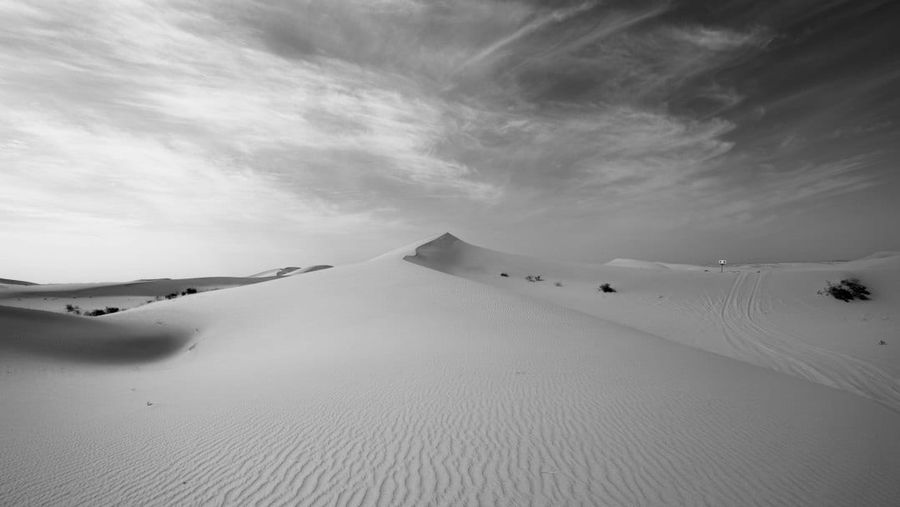
We would steer you to September and early October. Our autumn routes are designed for photographers and slow lookers: we build dawn and dusk time at one location instead of moving camp daily, because the moments worth waiting for do not fit a transfer schedule. The Central Mongolia Orkhon Valley and the Northern Mongolia larch forests give you colour; the Gobi gives you clean air and long sightlines. The Deluxe Collection and Signature Collection suit this style best — we route them with longer stays at fewer camps, so you are rested when the light arrives. No season guarantees perfect light; what we can design is time and position.
If you are seeking wildlife
The honest principle first: no itinerary can promise a sighting, in any month. What we design is patience — more time at fewer locations, quiet hours at dawn and dusk, and camps away from traffic. For that reason we often suggest the shoulder windows, late May–June or September, when the landscapes are quieter and a slow day feels natural rather than like a detour. The Explorer Collection is the one we route to cover more ground per day for travellers who want range; a tailor-made journey is the better tool when you want to sit still in one habitat. Tell us what you hope to see, and we will build the route around time in the right places — never around a promised encounter.
If your family travels on fixed school-holiday dates
When the dates cannot move, choose the window with the fewest variables: June to August, with July and August the most straightforward for northern roads and lake access. The Family Collection is the collection we route for exactly this, with shorter driving days, more breaks, and — where the route allows — two nights per camp so children settle instead of repacking daily. Central Mongolia's valley landscapes pair naturally with Khuvsgul Lake, whose practical season, in our routing experience, runs June to September. A tightly routed Central plus Khuvsgul combination can work in around 10 days with two-night stays; a fuller two-region journey needs 12–14. We will send you the current family itinerary and day count for your dates. Summer rain can still touch northern routes, so we plan with a buffer day.
If you want quiet camps and slow days
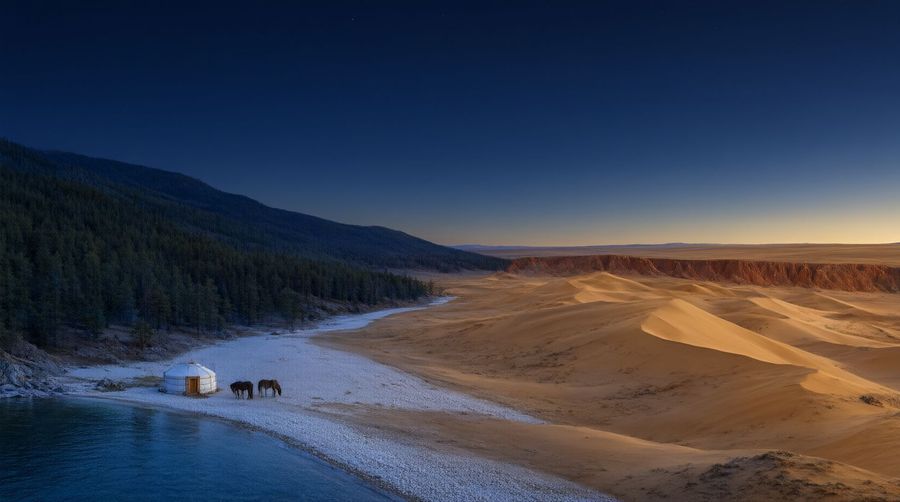
Come in September–October, or late May–early June if you prefer green to gold. Fewer travellers means camp evenings feel like the steppe again rather than a shared lobby. This is the style we route the Deluxe Collection around, with longer stays at fewer camps; the Signature Collection we route with the most immersive, locally hosted stays — longer at each camp, fewer transfers. We will send you a current autumn itinerary and day count as a reference point for the pace.
If winter landscapes are the point
Then winter is your season, not a compromise. Clear blue skies, snow on the dunes, and an off-season quiet you cannot find in July. Winter journeys are bespoke by design: shorter daily distances because daylight is short, centrally routed because northern access is limited, and every overnight confirmed before you commit. Our published winter journeys in Central Mongolia are starting shapes — we will send you the current itinerary and day count for your dates, and your interests reshape them.
How Do Style, Season, Region and Collection Line Up?
The table below maps each travel style to the window we would design around, the regions that reward it, and the collection that carries it best. Every row can also be run as a tailor-made private journey.
| Travel style | Season window | Best-fit regions | Collection fit |
|---|---|---|---|
| Photography & slow looking | September–early October | Central (Orkhon Valley), Northern larch forests, Gobi | Deluxe or Signature; tailor-made for dawn/dusk stays |
| Wildlife seeking | Late May–June or September (quiet shoulder windows) | Gobi, Central; open steppe by bespoke design | Explorer, or tailor-made for patience in one habitat |
| Family on fixed dates | June–August (July–August most dependable north) | Central + Northern/Khuvsgul | Family |
| Quiet camps & slow travel | September–October; late May–early June | Central, Gobi | Deluxe or Signature |
| Winter landscapes | November–February | Central; Gobi by bespoke design | Tailor-made winter journeys |
| First-time all-rounder | July–August | Gobi + Central, or Gobi + Northern | Signature, Standard or Explorer |
Two notes on reading this table. First, it maps fit, not a fixed operating calendar — exact availability for your dates is confirmed when we design the route. Second, you will notice Eastern Mongolia is absent: its open steppe is a landscape we route through tailor-made journeys, where the seasonal window is confirmed with you at design time rather than assumed here. Explore each region in depth from our destinations hub — the Gobi and south, Central Mongolia, the north and Khuvsgul, and Western Mongolia and the Altai.
Match trip length to region count, not ambition
Around 10 days suits one region deeply. A full two-region journey typically needs 12–14 days, and a Western Mongolia/Altai extension needs two weeks or more. Season then adjusts the daily distances inside that frame — winter days are shortest, spring carries a buffer day.
How Does the Design Team Adapt a Journey to Its Season?
This is where a private, all-inclusive journey earns its keep. The season does not just change the view from the ger — it changes the plan underneath it.
- Pacing. In spring we add a buffer day as standard, because thaw-softened roads and higher river crossings should absorb into the schedule, not into your evening. In winter, short daylight sets a shorter daily distance, and we plan around it rather than against it. In summer, longer evenings let a driving day end with a walk instead of a checklist.
- Ger camp selection. We favour locally owned camps and confirm what is actually open for your dates — Gobi camps are normally all open in summer, autumn routes finish before the late-October closures, and winter overnights are individually confirmed. Where the route allows, families get two nights per camp.
- Routing. In our routing experience, northern roads are most reliable in July–August, September brings early frost on higher ground, and from around October snow and ice limit lake access. We route to the season's strengths — paved-road proximity in early spring, central anchors in winter — instead of forcing a summer map onto a different month.
- Support in every season. Our 24-hour trip assistance and on-the-ground coordination support you on every journey we design. Weather in a vast country is unpredictable in any month; the answer is not worry, it is a team that can adjust a route while you finish your tea.
If you are still choosing between collections themselves, our Signature vs Deluxe comparison sets them side by side.
- 1
Name your interest first — photography, wildlife, family time, quiet, or winter light. This sets the season before any date does.
- 2
Tell us how fixed your dates are — a school-holiday window and a flexible month lead to very different designs.
- 3
Share your party and pace — children's ages, walking appetite, and whether you prefer one region deeply or two regions broadly.
- 4
Give us your rough trip length — around 10 days for one region, 12–14 for two, two weeks or more with the Altai.
- 5
Contact us early enough — we recommend four to six months ahead for summer travel or festival dates; shoulder-season and autumn trips can often be arranged with two to three months' notice.
Is autumn or winter worth it, or should you wait for summer?
Autumn (September to early October) is worth it for clear light and quiet camps; winter suits travellers who specifically want snow and cold-season culture. Wait for June–August if your dates are fixed or you want the most dependable roads.
Frequently Asked Questions
Can you visit Mongolia in winter?
Yes. Winter journeys run from November to February as bespoke private trips, with shorter daily distances to fit the daylight, routes anchored in accessible regions, and every overnight confirmed for your dates before you commit. Mongolianstar Adventures designs winter journeys in Central Mongolia as bespoke starting shapes — we will send you the current itinerary and day count for your dates.
When is Khuvsgul Lake at its most accessible?
In our routing experience the practical lake season runs June to September, with July and August the most straightforward — ger camps fully operational and the grassland crossing at its most predictable. Summer rain can still affect northern roads, so we keep a buffer day in lake itineraries.
How far in advance should I book a Mongolia trip?
We recommend initiating contact four to six months before summer travel or festival dates. Shoulder-season and autumn journeys can often be arranged with two to three months' notice. Winter departures are designed individually, so earlier conversations give us more room to confirm the right overnights.
Is September too late for the Gobi Desert?
Not at all — in most years we route the Gobi comfortably into October, and September usually brings clearer skies and fewer travellers; we finish routes before the late-October camp closures.
Ready to Match Your Season?
Mongolia is vast, but the decision is simple once you lead with your interest: summer for dependable family and first-visit journeys, autumn for light and quiet, spring for green solitude, winter for a deliberate cold-season adventure. Tell us what you came for, and we will design the season around it.
Let's find your season
Share your interests, dates and pace with our Design Team, and we will confirm a seasonal route — region by region, camp by camp — built entirely around you.
Start your journey inquiry


