


This Khuvsgul Lake travel guide begins with the essentials: Khuvsgul is Mongolia's great alpine lake, and in our experience it rewards three to five unhurried days on its shores plus travel time, within a June–September window. Known on our Northern Mongolia region page as the "Blue Pearl of Mongolia", this pristine freshwater lake sits among forested mountains where Siberian taiga meets Mongolian steppe — a landscape that asks you to slow down rather than tick boxes.
By the Mongolianstar Adventures Travel Design Team — itinerary architects
This guide goes deeper on the lake itself: what its setting rewards, how flying versus overlanding reshapes your itinerary, how to weave Khuvsgul into a 10–14 day northern-focused journey, what ger camp life around the lake actually looks like, and when to go. If you are still deciding overall trip length, our companion piece on how many days Northern Mongolia needs covers the wider routing question; here, we focus on the lake.
Khuvsgul planning essentials
- Allow 3–5 days at the lake on top of travel time; our northern routing guide recommends six to eight days for a well-paced northern segment including Khuvsgul.
- Fly north, drive back (or the reverse) if you have six to seven days — a morning departure to Mörön plus the road transfer is designed to reach the shore the same day, with the airline, schedule and transfer time confirmed when we book.
- Overland from Ulaanbaatar is typically a full day or more each way, through Bulgan and Arkhangai grasslands.
- Khuvsgul pairs naturally with the Orkhon Valley in a 10–14 day combined route; the longer arc lets you stretch lake time to five or six nights instead of the baseline three to five days.
- July–August: camps and tracks fully open, summer rain still possible. September: golden larch, fewer travellers, camp dates need confirming. Late May–early June needs an extra buffer day.
- Expect proper beds, hot meals in dining gers, and either en-suite or shared-facility gers depending on your collection.
What Does Khuvsgul's Setting Reward?
The lake is backed by the Khoridol Saridag ranges and the Siberian taiga — pine, larch and birch climbing the slopes above clear water. It is a different Mongolia from the open steppe and dunes most travellers picture: cooler air, forest shade, and a shoreline that changes character every few kilometres.
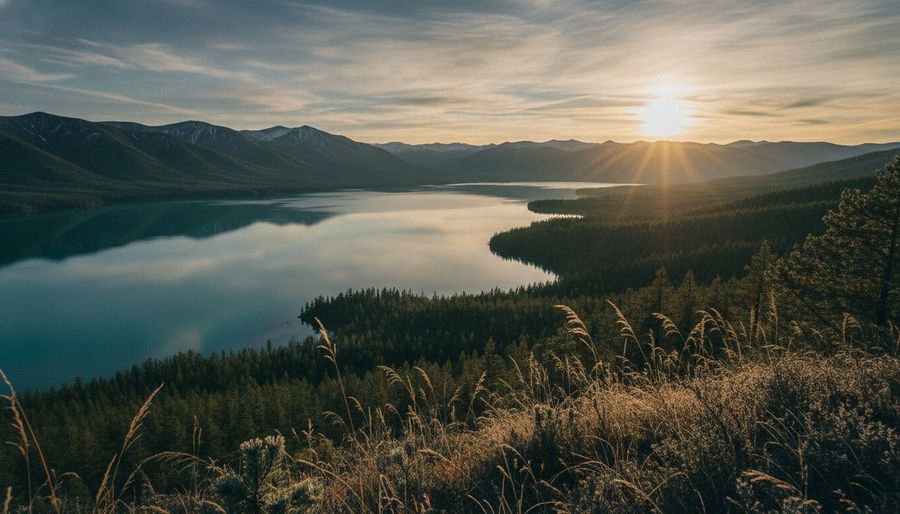
When we design lake days, we build them around a few simple route elements rather than a packed activity list:
- Lakeside walking — shoreline trails and forest paths where the pace is yours, with views across the water to the far ranges.
- Horseback riding along the shore — a gentle way to cover ground between coves and meadows, woven into the day rather than treated as a separate excursion.
- Time on the water — boating on the clear lake, suited to calm mornings.
- A nomadic family visit — part of our standard northern routing, and the moment many travellers remember longest.
- Reflection time — deliberately unscheduled hours. The lake's appeal is cumulative; a rushed half-day misses it.
We hold back one caution: this is a living landscape, not a zoo. Wildlife encounters happen on nature's schedule, and we never plan an itinerary around a promised sighting.
The Darkhad Valley and Reindeer-Herder Region as Extensions
Northwest of the lake lies the Darkhad Depression, a broad wetland basin that contrasts with the lake's forested shores. Deeper in the mountain forests live the Tsaatan, reindeer herders who maintain a traditional way of life in urts tents, tied closely to their herds.
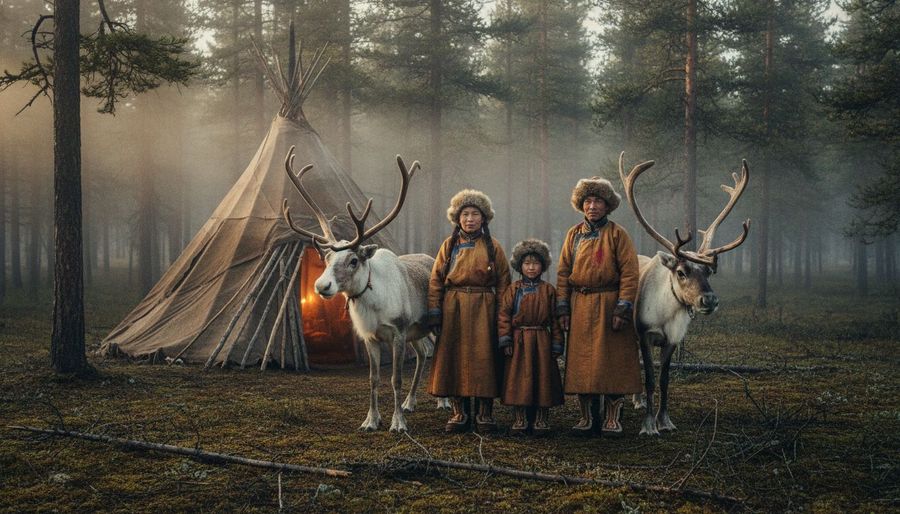
At routing level, treat this as an optional cultural extension, not a drop-in stop. Access to the reindeer-herder areas is seasonal and requires local coordination — the communities move with their herds, and visits depend on where families are camped and whether tracks are passable. When travellers want this element, we build extra days and flexibility into the plan from the start through our bespoke journey design, rather than trying to squeeze it between fixed lake nights. If a reindeer-herder visit matters to you, tell us at planning stage: where families are camped and whether tracks are passable decides what is realistic, and we build the extra days into a bespoke plan rather than promising it on a fixed route.
Should You Fly or Drive from Ulaanbaatar?
This is one of the biggest single decisions in a northern itinerary, because it changes how many days you actually spend at the lake.
Flying north
A morning departure to Mörön, followed by the road transfer to the lake, is designed to get you to the shore the same day; the airline, schedule and transfer time are confirmed when we book. For travellers with six to seven days, we typically recommend a flight north and overland return — or the reverse. You gain a full extra day at the lake, arrive fresh, and still experience the grassland crossing in one direction. Flight schedules and seats should be confirmed when you book; we coordinate this as part of the itinerary rather than leaving it to chance.
Overlanding both ways
The road north passes through the rolling grasslands of Bulgan and Arkhangai provinces before climbing toward the Khuvsgul basin. Expect a full day or more each way, with surfaces varying from paved sections to gravel and dirt tracks that slow progress after rain. Driven both ways, the crossing becomes part of the journey — provincial towns, river valleys, herding country — but it costs roughly two days of your total.
Realistic driving-day expectations
In our routing practice we budget roughly six to eight hours for a 300-kilometre day on unpaved roads, depending on track conditions, river crossings and weather — that is the arithmetic we plan around, not a published road standard. That is not a delay; it is the normal arithmetic of rural Mongolia, and we plan around it:
- Heavy driving days (250–380 km) are followed by lighter days or a two-night stay wherever the route allows, so we avoid stacking long transfers back to back.
- Moderate days (130–200 km) include activity stops — a canyon walk, a monastery, a family visit — so the drive itself carries the day's interest.
- We build a weather and road buffer into our northern routes, because rain can turn a firm track soft overnight.
Why we rarely plan a same-day overland round trip
Four to five days round trip from Ulaanbaatar is the minimum viable overland option in our routing guide — and at that length, most of your trip is road. If your window is under a week, the flight hybrid usually gives you more lake and less windscreen.
How Do You Combine Khuvsgul with Central Mongolia?
Khuvsgul and the Orkhon Valley belong together geographically: the overland route north already crosses the same Arkhangai and Bulgan landscapes that central Mongolia's highlights sit within. In our experience, a 10–14 day northern-focused journey absorbs both without retracing steps.
The routing shape we use for a 10–12 day Northern + Central journey looks like this (see our guide to how many days Northern Mongolia needs):
- Ulaanbaatar arrival — settle in, city orientation.
- Travel north — fly or begin the overland crossing through Bulgan and Arkhangai.
- Lake Khuvsgul, three to five nights — shoreline days, horseback riding, a nomadic family visit, and room for weather.
- South through the Khangai foothills — moderate driving days with stops.
- Central Mongolia — Erdene Zuu and Kharkhorin, the Orkhon Valley waterfalls and grasslands.
- Buffer day — held for road delays or extra walking, then return to Ulaanbaatar.
A published example of this arc is Timeless Mongolia: Lakes & Grasslands, a 10-day / 9-night northern journey linking the Khangai Mountains, Khuvsgul Lake and Kharkhorin. The tour page shows the current price, inclusions and day-by-day routing.
If you have 13–14 days, the natural additions are a second night in the Orkhon Valley, more lake time, or the Darkhad extension discussed earlier — decisions we make with you on a tailor-made plan.
Explore our Signature Collection for iconic-landscape journeys, or see the northern routes on our region page.
What Are Ger Camps Around the Lake Really Like?
Accommodation anxiety is the question we hear most from first-time visitors, so let us be concrete about what our curated routes provide.
On every curated route, guests stay in camps offering proper beds with bedding — not sleeping bags on the floor — and central dining gers serving hot meals that mix Mongolian and other cuisine. After a cool evening by the water, a warm dining ger matters more than any star rating.
Bathroom arrangements follow your collection:
| Feature | Standard & Explorer Collections | Deluxe Collection |
|---|---|---|
| Ger bathroom facilities | Shared — clean central shower and toilet blocks | En-suite gers with private bathroom facilities at selected camps |
| Beds and bedding | Proper beds with bedding | Proper beds with bedding |
| Meals | Central dining ger, hot meals | Central dining ger, hot meals |
En-suite gers are used on Deluxe Collection routes wherever the camp offers them; we confirm this per camp; shared-facility gers are the norm in the Standard and Explorer Collections. Both setups are comfortable, and the main difference is privacy: shared blocks are cleaned and maintained, but they are outside your ger. We confirm the specific camp and its facilities for your dates before the route is locked. Families weighing these options can compare paces and setups in our Family Collection.
Two honest caveats. First, we prioritise locally owned ger camps and regional suppliers wherever the route allows, which keeps your stay's value in the lake communities — but camp availability at Khuvsgul is seasonal, so we confirm specific camps against your dates rather than promising a named property in advance. Second, camps around the lake open and close with the season; outside the summer window, availability narrows quickly, which leads directly to timing.
When Should You Visit Khuvsgul?
The practical lake season runs June to September, with July and August the most straightforward months — ger camps fully operational and the grassland crossing at its most predictable, though summer rain still calls for a buffer day. Here is how the seasons compare on our northern routes:
| Period | Roads | Lake access & scenery |
|---|---|---|
| Late May–June | Improving, some soft sections | Good access; wildflowers emerging |
| July–August | Generally the most passable — camps and tracks fully open, but summer rain can soften sections after storms | Excellent; warm days, cool nights |
| September | Good; early frost on higher ground | Excellent; larch forests turn gold |
| October–April | Variable; snow and ice possible | Limited |
Why autumn colour comes with a trade-off
September is our quiet favourite: thinner crowds, golden larch above the water, and crisp light that photographers love. But it is worth checking the practical side before committing — as the season winds down, tourist services around the lake taper off, and camp availability needs confirming rather than assuming. Early frost on higher ground also means colder nights and a packing list that respects them. We treat September as a rewarding choice with slightly more coordination, not a risk.
How we pace shoulder-season visits
For travellers arriving in late May or early June, we advise building in an extra buffer day: spring thaw leaves rural roads muddy and river crossings higher, and that day absorbs the difference without costing you lake time. In September, we keep driving days moderate and confirm each camp's operating dates before the route is locked. In both shoulders, our 24-hour trip assistance and on-the-ground coordination mean a changed track or a closed camp becomes a rerouting conversation, not a stranded evening.
Khuvsgul Lake Travel Guide: Frequently Asked Questions
How many days do I need at Khuvsgul Lake itself?
Plan three to five unhurried days on the shore, plus travel time. Our guide to how many days Northern Mongolia needs recommends six to eight days for a well-paced northern segment including the lake, shoreline activities, a nomadic family visit and a weather buffer; four to five days round trip from Ulaanbaatar is the minimum viable overland option.
Is it worth flying to Mörön instead of driving?
If you have six to seven days, usually yes — in one direction. A morning departure to Mörön, followed by the road transfer to the lake, is designed to get you to the shore the same day; the airline, schedule and transfer time are confirmed when we book. We typically recommend flying north with an overland return (or the reverse) so you keep the grassland crossing without spending two full days on it.
Can I visit the Tsaatan reindeer herders from Khuvsgul?
Sometimes, but treat it as a planned extension rather than a day trip. The reindeer-herder areas in the remote northern valleys are seasonally accessible and require local coordination, so we design extra days and flexibility into bespoke itineraries that include them.
Are there en-suite bathrooms at lakeside ger camps?
At selected camps, yes — en-suite gers are used on Deluxe Collection routes wherever the camp offers them, and we confirm this per camp. Standard and Explorer Collection routes use gers with clean central shower and toilet blocks. All curated-route camps provide proper beds with bedding and hot meals in dining gers.
Is September a good time for Khuvsgul?
Yes — golden larch, fewer travellers and good lake access. Confirm camp availability for your dates, pack for cold nights and early frost on higher ground, and keep driving days moderate.
Ready to Plan Your Lake Days?
Khuvsgul rewards travellers who give it room: a few unhurried shore days, a sensible travel hybrid, and a season matched to your pace. As a women-led local team with over ten years of routing experience across the north, we will shape those choices around your dates and interests — and stand behind the plan with 24-hour assistance throughout.
Tell us your dates — we'll design the lake around them
Share your travel window, group and interests, and our Travel Design Team will propose a northern route with the right balance of lake time, road days and cultural extensions.
Start planning your journey


