


If you want Mongolia's historical and pastoral heart without a cross-country expedition, Central Mongolia — the Orkhon Valley, Kharkhorin and the surrounding steppe — is, in our experience as the team that designs these routes, the region we most often suggest to travellers with four to seven days from Ulaanbaatar. A Central Mongolia itinerary of roughly four to seven days can hold its essentials: steppe ger-camp nights, a nomadic family visit, the Orkhon Valley and the old capital at Kharkhorin. This guide gives you the route shape, the overnight logic, which legs are the longer drives, and how the region works alone, inside a 14-day journey, or as an autumn-colour trip — so you can decide what to ask for before you ever fill in an inquiry form.
Written by the Mongolianstar Adventures Travel Design Team — itinerary architects for our six collections and bespoke journeys across Mongolia.
Central Mongolia at a glance
- The core loop runs Ulaanbaatar → steppe ger camp → Orkhon Valley → Kharkhorin/Erdene Zuu → back to the city.
- Our published Central Mongolia tours are 10-day loops; a shorter four-to-seven-day version is a tailor-made trim of that same spine, not a separate product.
- The longest single leg on our published route is roughly 300 km into Kharkhorin; the valley itself deserves a full car-free day.
- Extend north to Terkhiin Tsagaan Nuur (White Lake), south to the Gobi, or far north to Khuvsgul — a domestic flight changes the maths on the longer pairings.
- Signature and Deluxe styles suit the region's comfort-and-activity balance; Family pacing and bespoke adjustments handle children and slower travellers.
Why does Central Mongolia reward a shorter trip?
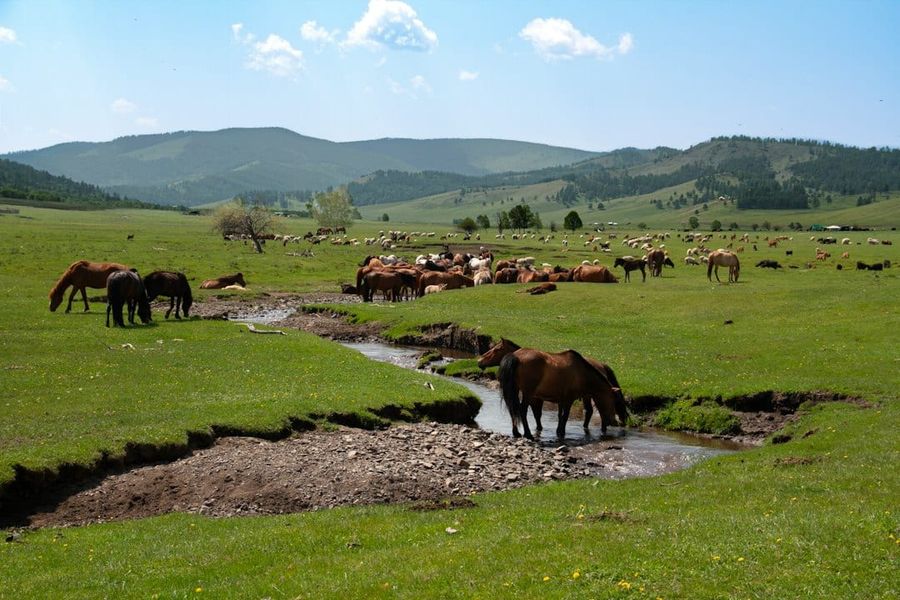
Because history and living pastoral culture sit close together here, and close to the capital. Our Central Mongolia region page describes this as the heart of the Great Mongol Empire: Karakorum, the first official capital, was founded here in the 13th century, and the historical sights concentrate in the Orkhon Valley Protected Area, protected for its cultural landscape rather than for any single monument. What makes the valley unusual is that the heritage is not fenced off from daily life — herding families still work the same grasslands their ancestors grazed, so imperial ruins, monastery walls and a morning milking session belong to one continuous landscape.
That density is why we often suggest this region to travellers with limited days. You are not choosing between "culture" and "nature" legs of a trip; a single valley delivers both. The published highlights of the region include:
- Kharakorum & Erdenezuu Monastery — one of Mongolia's oldest surviving Buddhist monasteries, beside the old capital site
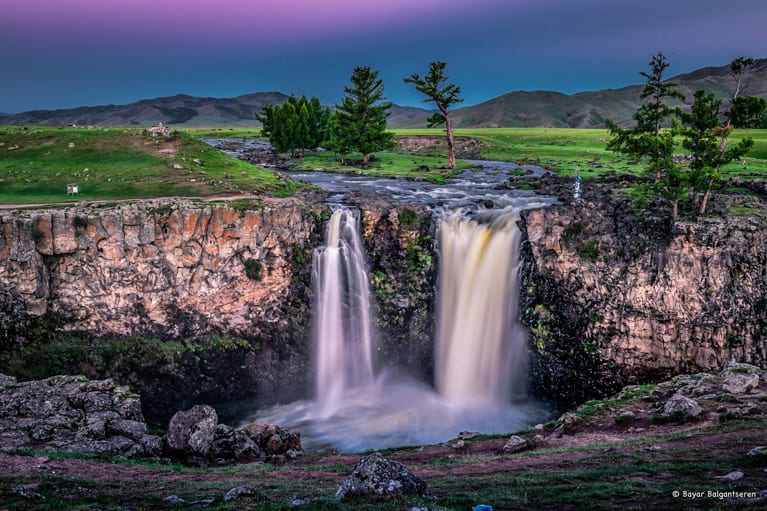
- Orkhon Valley & Waterfall — the river valley's cultural landscape and its waterfall
- Tuvkhun Monastery — the hilltop monastery founded by Zanabazar
- Khuisiin Naiman Nuur — the "eight lakes" area above the valley
- Elsen Tasarkhai — a sand dune belt on the steppe approach
- Khustai National Park — known for its Przewalski wild horses
- Gorkhi-Terelj National Park — granite formations including Turtle Rock, near Ulaanbaatar
- Ugii Lake and Tsenkher Hot Spring on the northern approaches
You will not fit all of these into a short trip, and you should not try. The routing skill is choosing a spine and letting the rest wait for a return visit.
How do you shape a 4–7 day Central Mongolia itinerary?
Our published Central Mongolia journeys are 10-day loops that also take in Arkhangai's hot springs and White Lake. A four-to-seven-day trip is what we build when we tailor that spine down to its historical and pastoral core, following the same tailor-made design process we use for every custom journey. The framework below uses the driving legs from our own Central Mongolia – 10 Days / 9 Nights itinerary.
The core route shape
- 1
Arrive in Ulaanbaatar — overnight in the city; our published route books a central Ulaanbaatar hotel at each end of the journey, which keeps arrival and departure days calm.
- 2
Drive out to the steppe — the published route reaches the Terelj area via the Chinggis Khaan Statue at roughly 150 km, then continues about 200 km to the Mongol Nomadic steppe area. On the way, Day 3 of that tour visits a local nomadic family on the open steppe — milk tea, homemade dairy products, and horse or camel riding — before the night in a well-equipped steppe ger camp.
- 3
Cross to Kharkhorin — approximately 300 km, the longest single leg of the core loop. Overnight at a ger camp near Kharkhorin, with Erdenezuu Monastery and the Karakorum site as the anchor.
- 4
Enter the Orkhon Valley — roughly 180 km from Kharkhorin to the Orkhon Waterfall area, overnighting in a valley ger camp.
- 5
Keep one full day car-free in the valley — our 10-day itinerary deliberately builds in a day with no transfer at all: horse riding and a nomadic family visit at the valley's own pace. In a shorter trip this is the day we protect first.
- 6
Return toward Ulaanbaatar — either straight back, or via the Elsen Tasarkhai dunes and Khustai if your day count allows, closing with a city night before your flight.
A five-day core, day by day
Five days is the shortest version of this route we would still call complete: four overnights, and one longer driving day each way.
- Day 1 — Ulaanbaatar. Arrive and overnight in the city.
- Day 2 — Terelj and the steppe. Out via the Chinggis Khaan Statue (~150 km), then on to the steppe ger camp (~200 km), with a nomadic family visit breaking the drive.
- Day 3 — Kharkhorin. The ~300 km transfer, with Erdenezuu Monastery and the Karakorum site in the afternoon.
- Day 4 — Orkhon Valley. Roughly 180 km into the valley: the waterfall and a valley ger camp night.
- Day 5 — Valley morning and return. An early start, a short valley morning, then the long run back toward Ulaanbaatar.
The full car-free valley day is what a sixth day buys: with six days you keep a day in the valley with no transfer at all, and with seven you can also split the return via Elsen Tasarkhai and Khustai. In five days the valley gets an afternoon and a morning rather than a day of its own — that is the honest trade.
Which legs are the longer drives?
| Leg (from our published 10-day route) | Approximate distance | Routing note |
|---|---|---|
| Ulaanbaatar → Chinggis Khaan Statue / Terelj | ~150 km | Gentle first day out of the city |
| Terelj area → Mongol Nomadic steppe | ~200 km | Nomadic family visit en route |
| Steppe → Kharkhorin / Erdene Zuu | ~300 km | Longest core leg; start early |
| Kharkhorin → Orkhon Waterfall | ~180 km | Arrive with afternoon light in the valley |
| Orkhon Valley → Khorgo–Terkhiin Tsagaan Nuur | ~250 km | Only with the lake extension |
| Orkhon Valley → Ulaanbaatar via Elsen Tasarkhai / Khustai | A full day's transfer | The return leg; split it over two days if your day count allows |
Two honest caveats. First, these are kilometres, not promises of hours — surfaces vary, and we plan generous time rather than optimistic time. Second, a four-day version means accepting the ~300 km inbound leg and trimming stops, while six or seven days lets the same spine breathe. If your window is tight, tell us your actual flight dates and we will show you where the route bends and where it should not.
The same spine at four, five, six and seven days:
| Days | Overnights | What fits | What you give up | Longest driving leg |
|---|---|---|---|---|
| 4 days | 3 nights | City night, one steppe ger night, Kharkhorin/Erdenezuu, a short valley stop | The car-free valley day and most en-route visits | ~300 km into Kharkhorin |
| 5 days | 4 nights | The day-by-day core above: steppe night, Kharkhorin, valley afternoon and morning | A full day in the valley; the return is driven in one long day | ~300 km into Kharkhorin |
| 6 days | 5 nights | The core plus a full car-free day in the Orkhon Valley | The Elsen Tasarkhai and Khustai stops on the return | ~300 km into Kharkhorin |
| 7 days | 6 nights | The core, the car-free valley day and a return via Elsen Tasarkhai and Khustai | Arkhangai and White Lake, which need a 9–10-day journey | ~300 km into Kharkhorin (return split over two days) |
The optional White Lake extension
With more days, the route continues north through Arkhangai: about 180 km from the valley to a hot spring stop, then roughly 250 km to Khorgo volcano and Terkhiin Tsagaan Nuur (White Lake), with a well-equipped ger camp night at the lake and a hot spring resort night in Arkhangai on our published itinerary. This is where a "short trip" quietly becomes a 9–10-day journey — a worthwhile trade if lakes and volcanic landscapes matter to you, but worth naming clearly so the day count stays honest. For the fuller northern picture, see our guide to how many days Northern Mongolia needs.
About the day counts
The four-to-seven-day shape here is a planning framework we build tailor-made, drawn from the verified legs of our published 10-day Central Mongolia tour. Exact pacing, overnight choices and feasibility depend on your dates and interests — the way to pin them down is a short conversation, not a fixed template.
What does the region actually reward — beyond the checklist?
At routing level, three things shape a good Central Mongolia itinerary:
- Layered history, walked not just viewed. Karakorum's foundations, Erdenezuu's walls and Tuvkhun's hilltop setting read best in sequence across two days, not as a single museum-style stop. We route Kharkhorin before the valley so the imperial story lands first and the pastoral landscape answers it.
- Nomadic family visits as anchors, not add-ons. On our published route the steppe family visit — milk tea, dairy tasting, a ride if you wish — sits mid-leg, breaking a drive into something memorable. The valley's car-free day repeats the pattern at a slower tempo. Plan visits where the driving already pauses; never bolt them onto a rushed transfer.
- Soft adventure woven through. Short rides, gentle walks to the waterfall or up to Tuvkhun, evenings in a ger camp under very dark skies. The region asks for moderate activity, not expedition fitness — which is exactly why it suits first trips and mixed-age groups.
What we deliberately leave out of a short route: trying to add Ugii Lake, Naiman Nuur and Tsenkher all at once. Each is real and rewarding; together they turn a focused journey into a driving marathon.
Explore the region behind the route
Browse the full highlight list and published Central Mongolia journeys on the region page before you choose your spine.
See the Central Mongolia regionShould Central Mongolia stand alone, sit mid-journey, or run in autumn?
All three work, and the choice mostly comes down to your total days.
As a standalone first trip
If Mongolia is new to you and your window is under a week, the core loop gives you the country's essential grammar — steppe, ger, monastery, valley — without long internal flights or multi-region logistics. It also pairs naturally with broader first-time Mongolia planning, which covers the practical groundwork this article leaves aside.
As the middle segment of a 14-day journey
Central Mongolia is the hinge of our longer published loops:
- Mongolia Grand Journey (14 days / 13 nights) runs from Terelj across the Gobi — Tsagaan Suvarga, Yol Valley, the Khongor dunes, Bayanzag — then north via Ongi Monastery into the Orkhon Valley, Kharkhorin/Erdene Zuu, the Mini Gobi and Khustai. The Kharkhorin → Mini Gobi leg is a half-day transfer before the final run toward Ulaanbaatar. Here the valley is the emotional midpoint: desert first, pastoral heart second.
- Green Steppes & Lakes (14 days / 13 nights) links the Chinggis Khaan Statue and Khustai with the mini sand dunes near Kharkhorin, Tsenkher Hot Springs (~150 km), Chuluut Canyon and White Lake (~180 km), Khorgo Volcano, then Khuvsgul Lake and Amarbayasgalant Monastery. Central Mongolia supplies the historical opening act before the lake country.
For a balanced ten-day alternative that blends regions, a ten-day Mongolia itinerary walks through the same trade-offs.
As an autumn-colour route
We publish a dedicated Central Mongolia in Autumn journey (10 days / 9 nights), built around the grasslands turning golden yellow. Its route runs Terelj → Khustai → Elsen Tasarkhai and the Khujirt hot spring → Tsetserleg and Tsenkher → Kharkhorin/Erdene Zuu → Ulaanbaatar, with packages tiered across hotel and ger-camp categories. Autumn suits this region because the colour is in the steppe itself — the landscape you are already crossing — rather than in one distant forest you must detour to reach. We plan autumn departures around the season generally rather than promising a peak week; ask us for current-season routing when you inquire.
Where does a flight change the routing maths?
Central Mongolia itself is overland country — the core loop is driven, and rightly so, because the steppe between stops is part of the experience. Flights matter when you pair the region with somewhere far:
- With the Gobi: our Signature Collection itineraries use domestic flights to connect Ulaanbaatar with the South Gobi, and our Gobi planning guide names Dalanzadgad as the internal-flight gateway, served through our partnership with MIAT Mongolian Airlines. Flying one leg lets a two-week trip give the Orkhon Valley its unhurried days instead of spending them on tarmac-and-gravel transfers.
- With the far north: the same Signature logic applies to Northern Mongolia, where our northern planning article names a flight to Mörön as the time-saver toward Khuvsgul.
The general principle from our FAQ: domestic flights are available on selected routes to save time and reduce long driving distances. They are a routing tool, not a default — schedules and availability vary by season, so we confirm the current options for your dates during design rather than quoting them here. If you are weighing a Gobi-plus-valley trip, the Gobi planning guide above covers the southern half in the same detail this one covers the centre.
Which collection style fits Central Mongolia?
The region's balance — comfortable nights, moderate activity, deep scenery — maps cleanly onto our collections:
| Collection | Fit for Central Mongolia |
|---|---|
| Signature | Our most balanced offering: iconic landscapes, comfortable ger camps, unhurried pace — the natural default for the valley |
| Deluxe | Upgraded accommodation, finer dining and private services; the highest-category ger camps available on the route, boutique lodges where they exist, and private 4WD between stops |
| Family | Shorter driving stages, frequent stops, child-friendly activities and family-sized ger camps with enclosed grounds and level walking areas, which we confirm with the camp before booking |
| Standard | Clean, comfortable ger camps with shared or basic en-suite facilities; moderate activity — standard hikes, rides, cultural visits |
| Explorer | More ground covered, wild camping and multi-day hiking or riding routes — for travellers who want the valley as a waypoint on a bigger push |
For most first trips we lean Signature or Deluxe here; our collection guidance for first-time visitors explains the reasoning in depth.
Adjusting pace for families or older travellers
A bespoke version of this route adjusts in predictable ways: splitting the ~300 km Kharkhorin leg with a proper lunch-and-stretch stop or an extra overnight, keeping the valley's car-free day intact while shortening walks, choosing ger camps on level, enclosed grounds, and building rest afternoons into the schedule. These are the same design principles behind our Family Collection — shorter stages, gentler activity — applied to any group that wants them. Tell us who is travelling, and the route adapts; the landscape does not need to be rushed to be felt.
Is four to seven days really enough for Central Mongolia?
For the core — steppe ger-camp nights, a nomadic family visit, the Orkhon Valley and Kharkhorin/Erdenezuu — yes, in our planning experience, provided you accept one longer driving day each way. Our published Central Mongolia tours run 10 days because they add Arkhangai and White Lake.
Do I need a flight to visit the Orkhon Valley?
No. The core Central Mongolia loop is fully overland from Ulaanbaatar. Domestic flights become useful only when you combine the region with the South Gobi or the far north, where they replace long transfer days on selected routes.
Is the region suitable for children or slower-paced travellers?
It is one of the easier regions to adapt: moderate activity, cultural visits that break up drives, and ger camps that can be chosen for level, enclosed grounds. A bespoke or Family-style pacing splits the longer legs and protects rest time without losing the valley's essential days.
Ready to route your Central Mongolia journey?
Central Mongolia gives you the country's historical and pastoral heart in a compact, well-supported loop — steppe nights, a living valley, the old capital — whether it stands alone or anchors a longer journey. Decide your day count and your extension, and we will handle the pacing, the camps and the roads, backed by 24-hour trip assistance throughout.
Let's design your route
Send us your dates, group and interests through the inquiry form, and our women-led design team — with over ten years of local routing expertise — will shape a Central Mongolia journey around them.
Start your itinerary inquiry


