


By the Mongolianstar Adventures Festival & Culture Team · Updated October 5, 2026
Mongolia's three best-known celebrations each honor something different: Naadam (July 11–13) celebrates the skills of herding life through wrestling, horse racing and archery; the Golden Eagle Festival (each October, in Bayan-Ulgii in the Altai) celebrates Kazakh hunting heritage and the bond between hunter and eagle; and Tsagaan Sar, the lunar new year, celebrates renewal and family through hospitality at home. None of them is staged for visitors — which is exactly why knowing your place in them matters. We run festival journeys with our own travelers every year, and the guests who leave happiest are rarely the ones with the biggest cameras. They are the ones who understood what they were watching.
The short version
- Naadam is Mongolia's own national holiday, held across the whole country — the Ulaanbaatar stadium ceremony is only the loudest of many.
- The Golden Eagle Festival judges the hunter–eagle bond, dress and horsemanship; no hunting takes place, and the eagles are partners, not props.
- Tsagaan Sar is a family holiday of greetings and hospitality, not a public spectacle — you experience it as an invited guest or not at all.
- The etiquette is one skill set everywhere: follow your host's lead, ask before close-up photos, accept what's offered with thanks, stay out of competition space.
What is Naadam actually celebrating?
Naadam celebrates competence — the physical skills that herding and, historically, warrior life demanded: staying on a horse over long distances, throwing an opponent, shooting straight. That is why its formal name is Eriin Gurvan Naadam, the "Three Manly Games": horse racing, wrestling and archery, held every year on July 11–13. The games are not decorative folklore attached to a holiday. In our reading of the tradition, they are the holiday — a country testing, publicly and proudly, the abilities its way of life was built on.
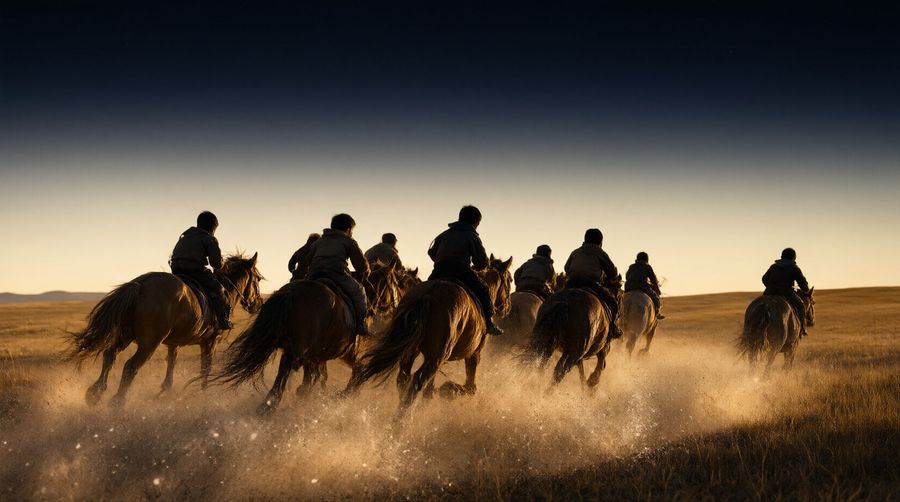
The mechanics reward attention. Wrestling is a knockout bracket of several hundred wrestlers with no weight classes and no time limits; the champion earns the title Avarga — "Titan." The races are cross-country courses of up to 30 km ridden by child jockeys, and when a horse finishes well, the praise goes to the horse and the family that raised and trained it. Women compete in archery, girls ride as jockeys, and a fourth contest — ankle shooting — rounds out the grounds. Once you know this, the crowd's reactions make sense: they are cheering bloodlines, training and local reputation, not just speed.
Why the stadium is only the loudest Naadam
Naadam is not one festival. It is hundreds. The State Naadam opens in Ulaanbaatar on July 11, but by our team's account all 21 provinces and 333 soums (districts) hold their own Naadams — sometimes on different dates, chosen around local anniversaries, the condition of the pasture and the animals. A countryside Naadam is a community measuring itself: the family whose horse places well carries that standing through the year, and everyone watching knows whose colt it is. If you want the deeper mechanics of the games, we've written a full guide to the Three Manly Games and how Naadam works.
For travelers who want the games at conversational scale, we also arrange a private Mini Naadam for our tour groups on reservation — folklore performances together with wrestling, horse racing and archery, small enough that you can ask questions between events. It is the same celebration, at a distance where you can see faces.
What are eagle hunters showing you at the Golden Eagle Festival?
They are showing you a relationship. The Golden Eagle Festival, run by the Mongolian Eagle Hunters' Association, takes place over two days each October in Bayan-Ulgii province, on festival grounds 7–14 km from Ulgii town, with two smaller festivals in September; exact dates are announced year by year. Roughly 70–80 hunters parade on horseback in traditional Kazakh dress, each carrying an eagle on the right arm — and the judges score not only the eagle-to-lure trials, which test the bond between hunter and bird, but also clothing, horse ornaments, archery and agility events.

Read that judging list again, because it tells you what the community values: the eagle's responsiveness is proof of years of patient daily work, and the dress and tack are proof of a household keeping its craft to a standard its neighbors will inspect. In our experience of these grounds, the loudest cheers are for a bird that comes fast and clean to its hunter — the visible result of trust. This is a Kazakh community assessing itself, with visitors welcome along the ridge. Our cultural guide to the Golden Eagle Festival walks through the events in detail.
Why there is no hunting — and why the eagles go home
No hunting takes place at the festival: the eagles fly to a dragged stuffed lure, never live prey. That surprises some visitors, but it fits the wider tradition. As Kazakh hunters describe their practice — an account documented in a 2016 SIT Graduate Institute study cited in our festival guide — hunters work with wild-caught female golden eagles for five to ten years, then release them back to the cliffs to breed. The eagle is a temporary partner in a working life, not a possession kept forever. Understanding that changes how you watch: the bird on the glove is mid-story, and the story ends with it flying free.
What does Tsagaan Sar celebrate — and can visitors join?
Tsagaan Sar — "White Moon" — is the Mongolian Lunar New Year, as Mongolia's official tourism portal, Go Mongolia, notes in its visitor guidance. Its date follows the lunar calendar and shifts from year to year, landing in late winter; if you're planning around it, ask us for the coming year's dates rather than trusting an old blog post. What it celebrates is renewal: a fresh start ordered around family hierarchy and hospitality, with elders greeted first and food shared across households in a sequence of visits.
Here is the honest answer to "can I join?": Tsagaan Sar is not a public spectacle with stands and tickets. It happens inside homes, between relatives and neighbors, and a visitor experiences it as an invited guest — through a host family's invitation — or not at all. We think that is worth respecting rather than routing around. If a family invites you in, you are being included in something intimate: follow your host's lead completely, greet the elders as they direct, and accept what is offered with both hands and thanks. If no invitation comes, the season is still a beautiful time to travel — just don't treat private family visits as an attraction to be booked.
How do you behave as a welcome guest on festival grounds?
You behave like a considerate neighbor at someone else's big day. The rules we give our own travelers before every festival departure are short, concrete and the same whether you're at a soum Naadam or the eagle grounds outside Ulgii:
- Stay out of competition space. The wrestling circle, the archery line, the race finish and the eagle launch area belong to competitors and officials. Watch from where spectators stand — never step in for a better angle.
- Ask before close-up photos. A wrestler resting between bouts, a jockey's family adjusting a saddle, an archer mid-preparation — these are people at work, not exhibits. Ask first, and accept a "no" gracefully; it costs you nothing and buys real goodwill.
- Give the eagles space. An eagle on a glove is a working animal managing stress in a crowd. Don't reach toward it, don't crowd the hunter for a portrait, and let hosts lead any closer introduction.
- Never interrupt a greeting or a preparation. If elders are exchanging greetings or a hunter is settling his bird, wait. The moment you want to photograph is often the moment you should stand still.
- Apply ger-visit courtesy everywhere. Festival grounds run on the same hospitality as a family camp: accept offered tea and food graciously, follow your host's lead, and remember a taste taken with thanks matters more than finishing everything.
The snuff bottle test
At festivals and in gers alike, you may be offered a snuff bottle — a small, often ornate bottle passed between host and guest as a formal greeting, especially among older men. You don't need to know the whole ritual. Receive it with your right hand, mirror what your host does, and pass it back with a nod. Handled with attention, this one small exchange marks you as a guest worth welcoming.
None of this is a minefield. Mongolian hosts are practiced at forgiving a foreigner's clumsy moment — what they notice, and remember, is whether you were paying attention.
Why festival etiquette is really just ger etiquette
Here is the connection most festival guides miss: the skills, foods and hospitality you meet at a festival are the same ones running everyday nomadic life the other eleven months of the year. About 30% of Mongolia's population are nomads living in gers (felt dwellings) and moving several times a year with the five animals the lifestyle rests on — horses, cows, sheep, goats and camels. The horseman you cheer at Naadam trains those horses at home. The dairy foods offered at a festival table come from the same morning milking our guests watch on family visits, where children often pull travelers in to help churn airag (fermented mare's milk).
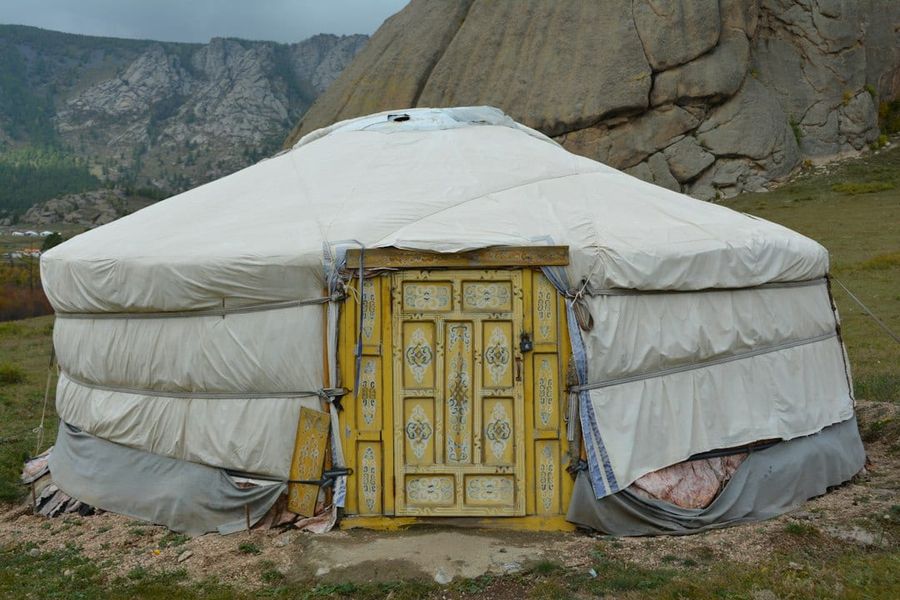
So learn the household rules once and you hold the key to every festival. Our standing advice for visiting nomadic families respectfully applies word for word on festival grounds: follow your host's lead on where to sit, when to eat and how to greet elders; step over the raised threshold of a ger, never on it; ask before close-up photos; and treat the ger as a working household, not an exhibit. A festival is that household's culture turned up loud for a few days — the courtesy underneath doesn't change. These encounters belong to a much wider range of experiences across Mongolia, and the travelers who do them well tend to enjoy all of them more.
Do I need a ticket or invitation to attend Naadam?
The countryside Naadams we take guests to are community events on open grounds, and spectators are generally welcome — you attend as a respectful observer, not a ticket-holder at a show. The State Naadam stadium ceremony in Ulaanbaatar is a separate, ticketed event; our travel design team handles those arrangements when a journey includes it.
Is the Golden Eagle Festival cruel to the eagles?
No hunting takes place at the festival — eagles fly to a dragged stuffed lure, not live prey. In the wider tradition, hunters work with their eagles for five to ten years and then release them back to the wild to breed, so the partnership is temporary by design. Give the birds space in crowds and let the hunter manage every interaction.
Can tourists take part in Tsagaan Sar?
Only as an invited guest. Tsagaan Sar is a family holiday of household visits and hospitality, not a public event, so there is nothing to "attend" without a host. If a family invites you, follow their lead on greetings and food; if not, respect that it is private family time.
What should I do if I'm offered food or drink I can't finish?
Accept it graciously and take a taste with thanks — in Mongolian hospitality, receiving warmly matters more than finishing everything. Refusing outright reads as rejecting the gesture; a smile, a taste and a thank-you honors it. Your guide can quietly explain any dietary limits to hosts beforehand.
Are children welcome at these festivals?
Yes — festivals are family occasions, and Mongolian families attend with children of all ages. Ours is a favorite setting for traveling families: keep kids out of competition space, ask before photographing other children, and let your hosts set the pace of any interaction.
If you'd like to stand on these grounds with someone who can tell you whose horse just won and why the crowd erupted, we'd love to plan it with you. Our women-led local team has been designing private festival journeys for over ten years, with 24-hour assistance throughout — plan my trip and tell us which celebration you want to understand from the inside.
Sources
- Go Mongolia — official Mongolian government tourism portal (2026): Tsagaan Sar as the Mongolian Lunar New Year.
