


Many travellers in their 60s and 70s enjoy Mongolia comfortably — when the journey is designed around shorter driving days, fewer overnight moves and accommodation you can genuinely rest in. Suitability depends on your own health, mobility and preferences, not your age; tell us about your group and we will design honestly around it, including where remote terrain imposes limits. That design work is exactly what our Travel Design Team does. As a women-led local Mongolian team with more than ten years of local travel expertise, we build private, all-inclusive journeys where the pace is set by you, not by a fixed group schedule. This guide to a Mongolia tour for seniors explains the pacing principles we apply, the comfort levers available — from ensuite ger camps to vehicle choice — and how multi-generational groups can each get their own moments. By the end, you will know what to ask for when we start designing your route together.
Written by the Mongolianstar Adventures Travel Design Team — itinerary architects with over ten years of local route design across Mongolia.
Key points at a glance
- A well-paced senior journey means shorter daily drives, two-night stays and room to rest — not a checklist of sights.
- The Family Collection publishes the gentlest rhythm: typically 2–4 driving hours a day with breaks, often two nights per camp.
- Comfort levers include ensuite deluxe ger camps, centrally located 4–5 star hotels in Ulaanbaatar, and vehicle choice matched to your group.
- Activities such as riding, camel trekking or gentle walks can be shaped around each traveller's preferred intensity — tell us your preferences at the planning stage.
- Every meal, camp booking and driving day is arranged before you arrive, backed by 24-hour trip assistance.
Why does pacing matter more than distance in Mongolia?
Mongolia is vast. The landscapes you came for — the Orkhon Valley's river meadows, the Gobi's dune ridges, Khuvsgul's forested shores — sit hours apart on roads that range from smooth tarmac to open steppe tracks. What makes a journey tiring is rarely any single sight; it is the accumulation of long transfers and a new bed every night.
The research agrees with what we see in our own planning. A study of senior pleasure tourists published in 2009 in the International Journal of Hospitality & Tourism Administration found that older travellers needed more time at each destination, tired when programmes packed in three or four attractions a day, and were uncomfortable on long coach rides. More recent work in the International Journal of Tourism Research (2026) reports that older adults value flexible itineraries that allow rest days and adapt around barriers to travel.
And this audience is anything but a niche: Eurostat reported that people aged 60–74 generated 23% of trips and 26% of tourism nights for private purposes in 2022 data published in 2024. Designing for slower, deeper travel is simply good itinerary architecture.
The pacing principles we design around
When we shape a private route for older travellers, these are the principles we bring to the drawing table:
- Shorter driving stages. We favour the gentler end of our published rhythms — the Family Collection's typical 2–4 hours of driving a day with breaks — rather than the 4–6 hour days of our Standard and Explorer routes.
- Two nights at key bases. For families and older travellers we consistently favour a resort or camp held for two nights over a new bed every evening. You unpack once; the landscape comes to you.
- Space in the middle of the day. Longer lunch breaks and unhurried afternoons are part of how we design for older guests, so the day breathes instead of marches.
- Fewer, better-chosen stops. One meaningful visit — a morning with a herding family, a viewpoint reached close by vehicle — outweighs three rushed ones.
- Honest routing. Seasonal road access and limited domestic flight schedules are real constraints in Mongolia. We plan around them openly rather than promising a route the season cannot support.
How bespoke numbers are agreed
Bespoke routes have no fixed published numbers: we agree daily hours, camps and opt-in activities with you before you book.
Which collection rhythm suits a Mongolia tour for seniors?
Our six curated collections each carry a different tempo. Here is the rhythm we design around, based on our published collection guidance:
| Collection | Typical daily drive | Nights per camp |
|---|---|---|
| Family Collection | 2–4 hours, with breaks | Often 2 nights |
| Standard Collection | 4–6 hours | Route-dependent — confirmed at inquiry |
| Explorer Collection | 4–6 hours | Route-dependent — confirmed at inquiry |
| Signature / Deluxe / Festival | Confirmed at inquiry | Confirmed at inquiry |
The Family Collection was designed for multi-generational groups travelling with children, and its shorter stages, frequent stops and welcoming accommodation make it a natural starting point for older travellers too. The Deluxe Collection adds a higher accommodation standard, which we cover below. If you are weighing the options, our guide to choosing the right Mongolia tour collection explains the differences in detail.
A private, tailor-made journey lets us draw on each: the Family Collection's pacing, the Deluxe Collection's camps, and a route drawn only around the regions you actually want to see.
Where two-night bases work beautifully
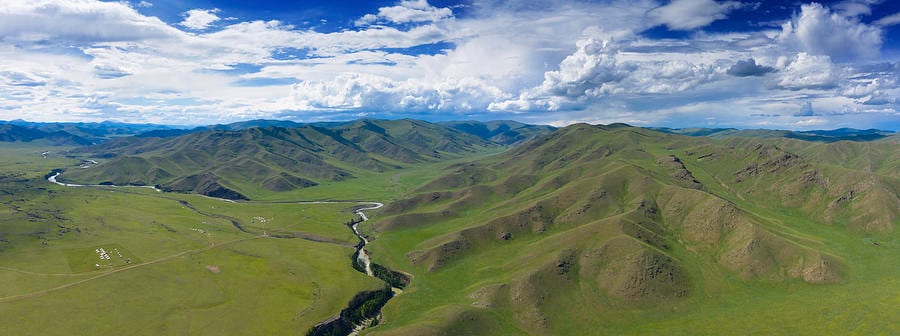
Central Mongolia is our favourite canvas for a slower journey. In the Orkhon Valley we favour a two-night base — a deluxe ger camp within reach of the waterfall, or a Khujirt-area wellness resort — so you arrive once and explore the valley's waterfalls, meadows and monastic ruins at your own pace. Properties are confirmed for your dates at inquiry. Northern Mongolia and Khuvsgul Lake reward the same approach: settle in, and let mornings and evenings at the shore do the work that a rushed transit never can.
Explore the Orkhon Valley at your pace
River valleys, waterfall walks and two-night ger camp bases — see why Central Mongolia anchors so many of our slower journeys.
See Central MongoliaWhat comfort levers can we adjust for you?
Comfort on a Mongolia journey is not a single upgrade; it is a set of levers we set together before you travel.
Accommodation
- Ulaanbaatar: guests stay in centrally located 4–5 star hotels with private bathrooms and Wi-Fi — a soft landing after your flight and a comfortable bookend before departure.
- Countryside: Deluxe Ger Camps offer private ensuite bathrooms, comfortable beds and heating. Deluxe routes use higher-tier ger camps with en-suite facilities and on-site dining, plus resort nights where the route allows. Specific properties are confirmed for your dates at inquiry.
- Where ensuites exist, we use them. For older guests we prioritise ensuite ger camps wherever they are available on the route, and we are candid about the stretches of Mongolia where camp standards are simpler.
Vehicles and seating
On a private journey the vehicle is assigned to your group and route — comfortable vans for tarmac stages, 4WD for steppe and desert tracks, and domestic flights where they sensibly shorten a transfer. Tell us about seating, entry height and stop frequency at the planning stage and we will match the vehicle to them.
Easy-access moments
Some of Mongolia's most memorable experiences ask very little of your legs:
- Scenic drives across open steppe, with the vehicle brought as close to viewpoints as the terrain allows — one of the specific adjustments we make for older guests.
- Short guided walks close to camp, at a conversational pace.
- Nomadic family visits, where the experience happens seated over milk tea as much as on your feet.
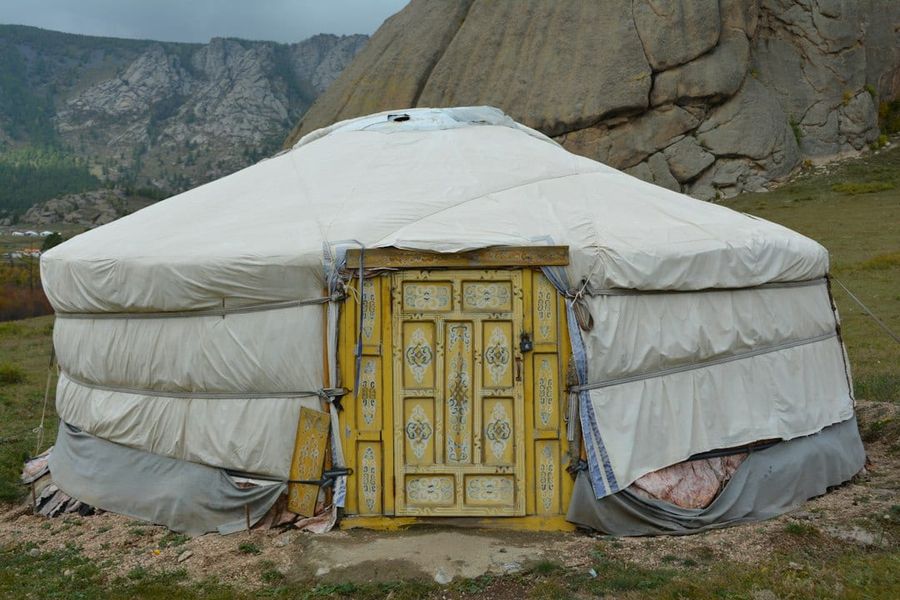
Our activity framework already grades intensity: Gentle means short walks close to camp and 2–4 driving hours a day; Moderate adds optional walking, riding or camel trekking on uneven ground with 4–6 driving hours; High involves full days on foot or horseback with tent nights. Most senior-paced private journeys we design sit firmly in the Gentle band, with Moderate elements available by choice. You can read the full framework in our guide to Mongolia tour difficulty levels.
How do optional activities stay optional?
A private journey has no group to keep up with. That changes everything about how activities work: a horseback or camel experience, a gentle hike to a ridge — each can be treated as an invitation rather than an obligation, with the day's alternative being a scenic drive, time at camp, or simply the view from your ger's doorway.
This matters because intensity is personal. Two travellers of the same age may want very different days, and research on older adults' travel experiences supports designing in exactly this flexibility — rest options and adaptive choices rather than fixed programmes, as the International Journal of Tourism Research study describes.
What we ask is that you tell us your preferences honestly at the planning stage: who wants to ride, who prefers to watch, who would like a walk only if the ground is even. We then shape each day so the keener walkers and the happy observers both end it satisfied. Our terms note that special requirements — dietary needs, mobility assistance, room preferences — should be given at booking; we do our best to fulfil them, though remote camps mean some requests cannot be guaranteed. The earlier we know, the more we can arrange.
Tell us at booking, not at the camp gate
Dietary requirements are accommodated with advance notice, and mobility or room preferences are far easier to honour when they shape the route from the start. Share them in your inquiry — there is no request too small to mention.
Can three generations share one itinerary happily?
Increasingly, they do. A bibliometric review of family tourism in Frontiers in Psychology (2022) notes that rising life expectancy has made grandparent–grandchild relationships increasingly important, and that multi-generational holidays — sometimes called "grandtravel" — are a growing segment. We see it in our own inquiries: adult children planning a Mongolia trip that includes their parents, their kids, and themselves.
The design answer is a shared spine with personal branches:
- One comfortable base everyone returns to. A two-night camp gives grandparents a settled rhythm while children burn energy nearby.
- Shared anchor moments. A nomadic family visit or a sunset viewpoint works for every age at once — these are the memories the whole group keeps.
- Individual intensity. Children take the longer walk or the pony ride; grandparents enjoy the same landscape from closer to camp or vehicle. Nobody negotiates anybody else out of their day.
- Split-day possibilities. If part of the group wants a fuller day out while others rest at camp, raise it when we design the route — vehicle and guiding arrangements for a private group are exactly the kind of logistics we confirm together at inquiry.
Combined with the pacing principles above, this shared-spine approach gives you both halves of a three-generation plan.
"A group of young seniors visited the splendid land of Mongolia in September 2025. Our needs are well taken care of..." — SHWU YIN SUNG, Singapore (published site review)
Why does the all-inclusive private model suit older travellers?
Because it removes the decisions you should not have to make on holiday. On our all-inclusive journeys, every camp booking, meal and driving day is arranged before you arrive: breakfasts, picnic lunches on driving days and hot dinners at camp are all covered, with dietary requirements accommodated given advance notice. Drinks, gratuities, travel insurance and personal expenses sit outside the all-inclusive price — we list what is and is not included in your itinerary before you confirm. There are no restaurant hunts in unfamiliar towns, no negotiating tomorrow's transfer, no arithmetic at the end of a long day.
Behind that arrangement stands our 24-hour trip assistance and a licensed, registered operation that is a member of the Mongolia Tourism Association. Mongolia's weather and roads occasionally rewrite plans; when they do, a local team that knows the camps, the drivers and the regional suppliers is a steady, practical response. When plans change, our 24-hour trip assistance and local team take on the rebooking and the problem-solving, and we plan honest seasonal routing from the outset to reduce those surprises.
For first-time visitors of any age weighing where to begin, our guide to choosing a collection pairs naturally with this one.
What should seniors look for in a private Mongolia tour itinerary?
Look for six things: daily driving hours agreed in writing, two-night bases, en-suite camps confirmed stop by stop, activities marked opt-in, a stated vehicle type and stop frequency, and dietary and mobility needs recorded at booking — backed by 24-hour trip assistance from a licensed operator that is a member of the Mongolia Tourism Association.
- Driving hours in writing. Each stage's approximate hours, with breaks, agreed before you confirm.
- Two-night bases. Fewer overnight moves, so you unpack once and the landscape comes to you.
- En-suite availability per stop. Confirmed camp by camp, with simpler stretches flagged rather than glossed over.
- Activities marked opt-in. Riding, camel trekking and walks as invitations, with a rest alternative close to camp.
- Vehicle type and stop frequency. The vehicle matched to your route, with seating, entry height and leg-stretch pauses agreed.
- Needs recorded at booking, and support behind them. Dietary and mobility requirements submitted at booking, plus 24-hour trip assistance from a licensed, Mongolia Tourism Association member operator.
Is Mongolia suitable for travellers in their 70s?
Many active travellers in their 70s enjoy Mongolia comfortably on a private, well-paced journey — shorter driving days, two-night camp stays and Gentle-tier activities. Suitability depends on your own preferences and circumstances rather than a number; tell us about your group at inquiry and we will design honestly around it, including where remote terrain imposes limits.
How many driving hours a day should we expect?
On the Family Collection, typical daily driving is 2–4 hours with breaks. Bespoke routes have no fixed published number — we agree daily hours with you before you book.
Do ger camps have private bathrooms?
Deluxe Ger Camps in the countryside offer private ensuite bathrooms, comfortable beds and heating, and Deluxe routes prioritise en-suite camps with on-site dining. In Ulaanbaatar, guests stay in centrally located 4–5 star hotels with private bathrooms and Wi-Fi. Some remote areas have simpler camps; we flag this openly when designing your route.
Can part of our group skip an activity?
A private itinerary is built around choices, not obligations. Tell us who prefers riding, walking or resting, and we shape each day so everyone sets their own intensity — including alternatives close to camp for those who prefer a quieter day.
When should we mention dietary or mobility needs?
At booking. Our terms ask that special requirements — dietary needs, mobility assistance, room preferences — be given at booking so they can shape camp selection and meals. We do our best to fulfil them, though remote camps mean fulfilment cannot always be guaranteed.
Before you book: health and medical planning
The following is general planning information, not medical advice. Mongolia's distances are long and its countryside is remote, so a little preparation before booking makes the journey far more comfortable.
- Speak to your doctor before booking about long driving days, uneven ground and heat or cold, and about the pace that is realistic for you.
- Choose travel insurance that explicitly covers remote-area medical evacuation, and check the policy's age limits and conditions.
- Plan for distance from medical help. Outside Ulaanbaatar, medical facilities are limited and distances are long; a ger camp is not next to a hospital.
- Carry your medication and discuss mobility aids with us. Bring enough prescription medication for the whole journey plus a written list, and tell us about any mobility aids at inquiry so we can plan camps, vehicles and stops around them.
Share health, mobility and medication needs when you inquire. We will design honestly around them — including telling you when a region or season is not a good fit.
Ready to design your journey?
Mongolia does not require you to be younger — it requires the itinerary to be smarter. Shorter drives, two-night bases, ensuite comfort and activities by choice turn a vast country into a series of unhurried, memorable days. Tell us your dates, your group and the pace that feels right, and we will draw the route around them.
Let's design a journey at your pace
Share your dates, group and preferences — our Travel Design Team will shape a private, all-inclusive Mongolia journey around them, or start with a tailor-made conversation.
Start your inquirySources
- International Journal of Hospitality & Tourism Administration (Taylor & Francis) — senior tourist pacing study, 2009
- International Journal of Tourism Research (Wiley) — older adults' travel experiences, 2026
- Frontiers in Psychology (PMC) — family tourism and multi-generational travel review, 2022
- Eurostat Statistics Explained — tourism trends and ageing, 2024 (2022 data)


