


Yes — we build private Mongolia photography tours as tailor-made journeys timed around dawn and dusk light, not fixed departures. A photography-focused private journey in Mongolia is designed backwards: we start from the images you want to make, then place your nights, drives and free hours so you are standing in the right spot when the light arrives. That is the difference between a photography itinerary and a sightseeing one. Instead of counting sites visited, we count mornings and evenings spent at each subject — and we protect them.
In this guide, our Travel Design Team explains how a photography brief changes the way we build a route, which regions suit which subjects, what to tell us when you inquire, and how a 10–12 day journey can alternate shooting days with transfer days. By the end, you will know how to brief us so your itinerary is built around the light, not around a checklist.
Key points
- A photography route is built backwards from subject and season — fewer stops, longer stays, dawn and dusk positioning.
- Transfers are timed so you arrive at camp before the evening light, not driving through it.
- The Gobi suits dune textures and camel silhouettes; Khuvsgul suits lake reflections; the Altai suits high peaks; the steppe and southern deserts suit night skies.
- Tell us your subjects, season, pace, group size and tolerance for early starts — the design follows from that brief.
- All-inclusive private support and 24-hour assistance let you concentrate on the frame.
How does a photography brief change the itinerary design?
When you tell us in your bespoke inquiry that photography is the point of the trip, it changes our starting assumptions. Our own design principle for photographers is simple: a photography-led itinerary lives and dies by daily timing — where you sleep relative to the light, how long you can wait, and whether a second morning at one location is possible. So we build the route backwards from the subject and the season, rather than forwards from a list of landmarks.
In practice, that means several deliberate choices:
- Fewer stops, longer stays. In our experience designing routes, low-angle light windows are short, and they repeat only if you are still in place the next morning. We would rather give you two dawns at one dune field than a single pass through three.
- Dawn and dusk positioning. Where you sleep matters more than how far you drove. We look for accommodation that puts the evening's subject within easy reach, so the evening light is spent shooting, not commuting.
- Drives timed to the light. In our experience designing routes, a workable Gobi rhythm is morning departure, midday arrival at camp, lunch, and an afternoon exploration of the immediate area. For a photographer, that rhythm has a purpose: you arrive before the evening light instead of watching it slide past the window. We avoid back-to-back long drives and keep the day after a transfer light.
- Flexible weather days. A flat, overcast morning is not a wasted day if the itinerary allows you to stay. We consider buffer time well spent on a photography route — it raises the chance of usable light without promising any particular conditions. Mongolia's weather keeps its own schedule; ours should be able to bend around it.
A fixed group departure keeps to one timetable for everyone. On a private journey we can hold the day open, stay a second morning and move when the light is worth moving for. It is exactly what a private, tailor-made journey is for.
What we cannot promise
We design for light; we do not control it. No itinerary can guarantee a clear dawn, a still lake or a wildlife encounter. What we can build is enough time in the right places that good conditions, when they come, find you ready.
Which regions match which photographic subjects?
Mongolia is vast, and its regions offer genuinely different frames. Matching your subject list to the right region — and the right season — is the first design decision. Our month-by-month Gobi season guide is a useful companion when choosing dates.
| Region | Signature subjects | Why photographers stay longer | When to shoot it |
|---|---|---|---|
| Southern Mongolia (Gobi) | Khongor dune textures, camel silhouettes, Bayanzag Flaming Cliffs, Yolyn Am ice canyon | Dune colours shift at sunrise and sunset; a second morning reveals different ridge lines | Spring and autumn, for tolerable daytime temperatures |
| Northern Mongolia (Khuvsgul) | Lake reflections, forested mountains, taiga landscapes, deer stones | Still-water reflections depend on calm mornings — worth waiting for | Summer for calm-water reflections; late winter for ice |
| Western Mongolia (Altai) | High peaks, Khoton & Khurgan Lakes, mountain reflections, Kazakh eagle-hunter culture | Big mountain light rewards patience and multiple attempts | Late summer into the autumn eagle-hunter season |
| Open steppe & southern deserts | Unbroken horizons, herding life, night skies | Darkness this complete is rare near populated regions | Clear, moonless nights away from settlement light; winter sessions need cold-weather kit |
Golden hour is the stretch shortly after sunrise and before sunset when the sun is low and the light warm and directional — the light these routes are built around. Season changes what else is available: in the Gobi, spring and autumn bring tolerable daytime temperatures for long dune sessions, while midsummer heat and deep winter cold shorten them. At Khuvsgul, summer mornings are the calm-water season for reflections, whereas late winter turns the lake into an ice landscape. In the Altai, late summer runs into the autumn eagle-hunter season, so mountain light and Kazakh eagle-hunter culture can sit inside one window.
Gobi: texture, silhouette and scale
The Khongor Sand Dunes (Khongoryn Els) are among the largest dune fields in Mongolia, and their appeal for photographers is precisely their instability — shifting colours at sunrise and sunset, ridge lines redrawn by wind. Camel trekking at the dune base offers the classic silhouette compositions against low light. Nearby, Bayanzag's Flaming Cliffs glow warm in evening light, and the Yolyn Am ice canyon offers a cool, enclosed contrast to all that openness. We generally suggest five to six days in the Gobi as a balanced minimum — one full day at each major site, with time to absorb the landscape rather than photograph and leave. For a photography brief, we lean toward six or seven days rather than the minimum five.
Khuvsgul: reflections and the taiga edge
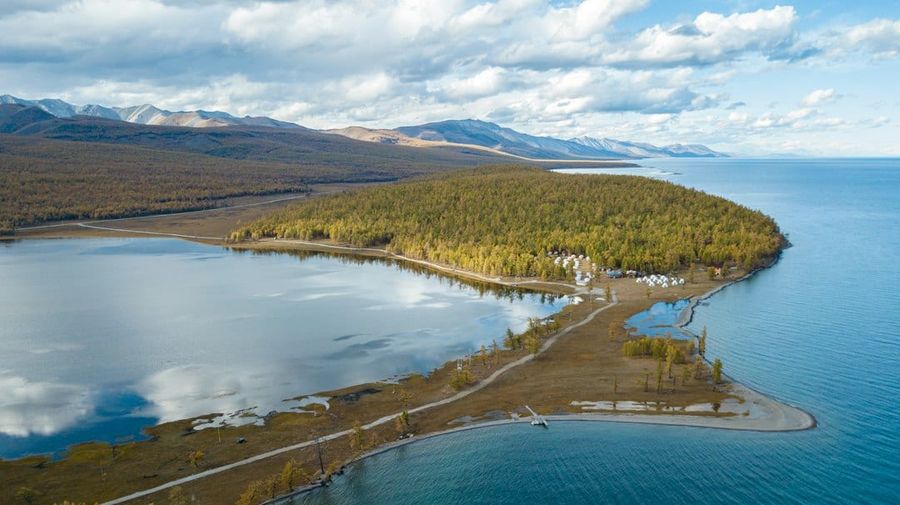
Khuvsgul Lake, the "Blue Pearl of Mongolia", is a pristine freshwater lake ringed by forested mountains — the zone where Siberia's taiga meets the steppe. Reflection work here is a matter of patience: calm water tends to reward early mornings, and a route with two or three nights on the shore gives you several attempts. Beyond the shoreline lie Tsaatan reindeer-herder communities and ancient deer stones. For Northern Mongolia we generally suggest six to eight days, including a buffer day — a rhythm that suits photographers especially well.
Altai: peaks, lakes and frontier distance
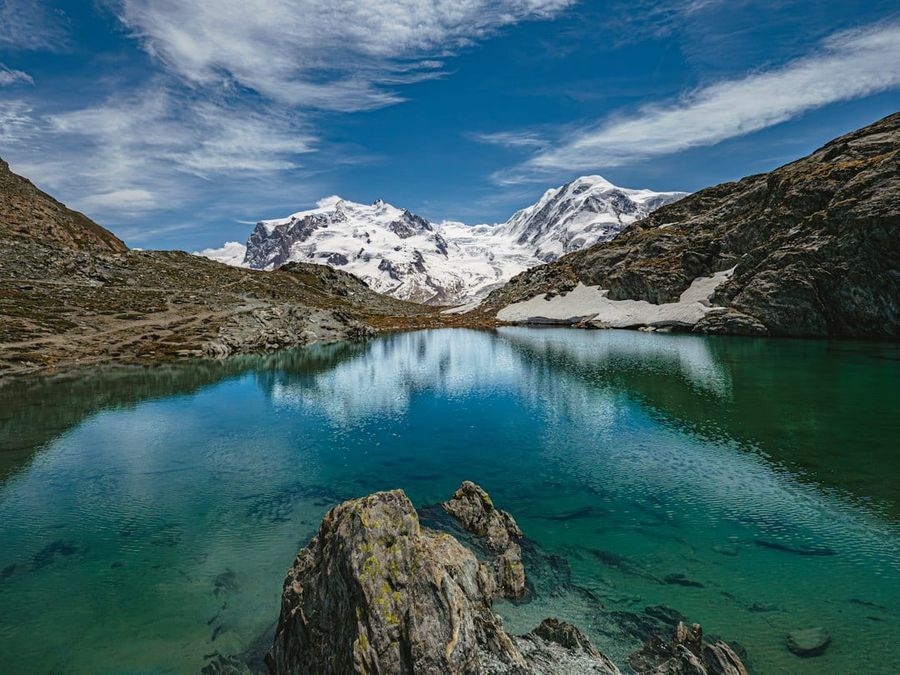
Western Mongolia is a long haul from Ulaanbaatar: the Altai Mountains, which reach 4,374 m at Khüiten Peak in the Altai Tavan Bogd massif, with alpine lakes and Kazakh eagle-hunter traditions. Scenes around Khoton and Khurgan Lakes and the Altai Tavan Bogd massif offer mountain reflections and big-sky compositions. Remoteness is the trade-off — reaching the Altai asks more of your calendar, which is why we usually design it as a dedicated journey rather than an add-on to a Gobi route.
Night skies: a subject in its own right
If astrophotography is on your list, dark skies in Mongolia are usually a matter of distance from towns rather than a special expedition — though a winter night session still needs cold-weather kit, a warm vehicle and a patient driver-guide. The atlas measures how much of the world lives under brightened skies; it does not rank Mongolia. In 2016, Falchi and colleagues reported in Science Advances that, in their world atlas of artificial night sky brightness, about 83% of the world's population — and more than 99% of people in the United States and Europe — live under light-polluted skies, with pristine skies now requiring long travel from populated areas. What we can say from our own routing is that camps in the southern Gobi sit far from any settlement light: in our experience, nights there are dark enough for Milky Way work, which is why we choose camps with the night sky in mind. In itinerary terms, night work simply means choosing camps away from settlement light and keeping the following morning gentle.
Start with the region that matches your subject list
Browse the Gobi's dunes, cliffs and canyon — then tell us which frames you are chasing.
See our Southern Mongolia routesWhat should you tell us in a photography brief?
The more precisely you describe the pictures you want, the more precisely we can place your nights. When you send an inquiry, these are the inputs that shape the design:
- Your subject list — dune abstracts, camel caravans, lake reflections, peaks, herding life, night skies. Rank them; we will weight the route toward your top two or three.
- Season and date flexibility — even a week of flexibility can change which light and landscapes are realistic.
- Desired pace — how many locations feel right, and how many consecutive mornings at one place you would welcome.
- Group size and companions — a solo shooter, a couple where one partner does not shoot, or a small group of photographers each need different daily rhythms.
- Tolerance for early starts and long drives — pre-dawn departures and rough desert tracks are part of the reward; tell us honestly where your limits sit.
- Practical requirements — charging needs, any mobility considerations, and whether night-sky sessions matter enough to shape camp choices.
Two practical notes for anyone shooting in remote Mongolia, from our experience designing routes: many remote ger camps run a generator for a few hours a day rather than around the clock, and we confirm the arrangements at each camp in your itinerary, so bring power banks for spare batteries. Mobile signal and data are limited in the regions you came to photograph — plan uploads for town days.
A photography brief gets a day-by-day proposal showing where each dawn and dusk falls.
What does a 10–12 day Mongolia photography tour look like?
Here is an illustrative sketch — a typical scenario, not a fixed package — combining Ulaanbaatar, the steppe and the Gobi. Notice the pattern: transfer days deliver you to camp before the evening light, and shooting days rarely move you at all. Exact driving times depend on season, road conditions and your chosen camps, so we confirm those in your personalised itinerary.
- 1
Day 1 — Arrive Ulaanbaatar. Rest, gear check, briefing with your driver-guide over dinner.
- 2
Day 2 — Transfer into the steppe. Morning departure, midday arrival at camp; evening on open horizons and herding scenes near camp.
- 3
Day 3 — Steppe shooting day. Dawn and dusk in place; midday free for rest, review and battery charging.
- 4
Day 4 — Transfer south toward the Gobi. Timed to arrive before the evening light; a gentle first look at the desert edge.
- 5
Day 5 — Transfer to Khongor. A driving day west to the dune-base camp; first sunset from the ridges if the crossing leaves time.
- 6
Day 6 — Khongor shooting day. Sunrise on the dunes, camel trekking at the base, a second sunset attempt from a different ridge.
- 7
Day 7 — Khongor flex day. Held in reserve: revisit whichever scene the weather shortchanged, or explore further along the dune field.
- 8
Day 8 — Bayanzag Flaming Cliffs. Transfer east; evening light on the red formations, night-sky session if conditions allow.
- 9
Day 9 — Yolyn Am canyon. A short repositioning day near Dalanzadgad; the canyon's cool, enclosed light contrasts with the open desert.
- 10
Day 10 — Begin the return north. A staged transfer with a light afternoon, breaking the journey rather than forcing it.
- 11
Day 11 — Return to Ulaanbaatar. Arrive with the evening free; backup, edit and celebrate.
- 12
Day 12 — Departure. Optional city morning before your flight.
Prefer lakes and taiga to sand? The same skeleton works with a Northern Mongolia segment in place of the Gobi — our six-to-eight-day northern guidance slots naturally into a 10–12 day frame. An Altai-focused journey follows the same principles but deserves its own dedicated window.
How does private, all-inclusive support help you concentrate on the frame?
The quiet advantage of a private journey is that someone else is holding the logistics while you hold the camera. Your driver knows the tracks; robust four-wheel-drive vehicles suited to desert terrain handle the rough sections; and we build buffer time into the routes we design, so a slow crossing need not cost you the evening. If conditions change — a washed-out track, a shifted plan — our 24-hour trip assistance is there to re-route around the problem.
As a women-led local Mongolian team with over ten years of local travel expertise and membership in the Mongolia Tourism Association, we also handle the human layer: introductions for a nomadic family visit made respectfully, locally owned ger camps chosen with your subjects in mind, and meals that appear when you come down from the ridge instead of pulling you off it. You think about the frame. We think about everything around it.
Drones, tripods, permits and cold: what to check before you travel
Drone rules, national-park entry conditions and any border-zone permits for the Altai Tavan Bogd area are set by the relevant Mongolian authorities and can change, so we do not publish them here as fixed rules. Tell us what you plan to fly or carry and confirm current requirements with us before you travel, so any paperwork time is built into the route.
On the ground, a tripod earns its weight at dawn, dusk and for any night session, and the four-wheel-drive vehicle is a stable base to work from and to keep kit out of the dust. Cold is the main power drain: in winter, keep spare batteries inside your jacket, rotate them, and expect fewer frames per charge than at home.
Can you guarantee golden-hour conditions or wildlife sightings?
No — and we would be wary of anyone who does. What we design is time and position: enough mornings and evenings at your chosen subjects, with flexible days, so that when good light or a memorable scene arrives, you are there for it.
Is there a fixed photography tour I can join?
Our photography journeys are tailor-made rather than fixed departures. A photography brief can start from any of our curated collections — Signature or Deluxe if comfort at camp matters after a pre-dawn start — and we then re-time the route around dawn and dusk, or build it entirely from scratch. Tell us in your inquiry that photography is the point of the trip, describe your subjects, and we build a private route around them.
How many days do I need for a photography trip?
For a first journey combining Ulaanbaatar, steppe and the Gobi, 10–12 days lets shooting days and transfer days alternate comfortably. A Gobi-only segment works well at six or seven days for a photography brief, with five as the minimum; Northern Mongolia at six to eight. The Altai deserves a dedicated window of its own.
Can I charge camera batteries and back up files at camp?
Many remote ger camps run a generator for a few hours a day rather than around the clock; we confirm the arrangements at each camp in your itinerary, so bring power banks for spare batteries. Mobile data is limited in remote regions, so plan cloud backups for town days.
Ready to design your route around the light?
Mongolia rewards photographers who stay put, rise early and leave room for the weather. Tell us the images you want to make, and we will place your nights, drives and free hours so the light finds you in position. Send your photography brief through our inquiry form and our Travel Design Team will come back to you with a day-by-day proposal and a quotation.
Let's build your private photography journey
Share your subject list, season and pace, and our Travel Design Team will draft a route around the light.
Send your photography brief


