


By the Mongolianstar Adventures Festival & Culture Team · Updated October 12, 2026
Naadam horse racing is a long-distance cross-country contest across open steppe — courses of up to 30 kilometres — ridden by child jockeys, with the horses grouped into categories by age. It runs during Mongolia's national holiday on July 11–13 as one of the Eriin Gurvan Naadam, the "Three Manly Games"; our Naadam overview covers the festival as a whole, so here we go deep on the race itself. When you stand on the grass and hear hoofbeats before you see anything, you are watching the part of Naadam that visitors most often ask us to explain — and the part many families here follow most closely. Let us walk you through what you're actually seeing.
What you're actually watching
- An endurance test, not a sprint — cross-country courses across open country of up to 30 kilometres, no laps, no track.
- The horse is the competitor — races are grouped by horse age, and admiration flows to the animal, its bloodline and the family behind it.
- The jockeys are children — under the Law on National Grand Naadam, jockeys must be at least seven, and State Naadam child-jockey eligibility is 8 to 12; girls ride alongside boys despite the "Manly Games" name.
- Safety is a live debate — Mongolian law sets minimum ages, and international bodies have raised concerns; we explain the context honestly below.
- Ask before photographing children and stay clear of the finish area — full etiquette below.
What kind of race is this — and where is the finish line?
It is a point-to-point race across open country, not a circuit: the horses start far out on the steppe and run toward a finish area near the festival ground, over courses that reach up to 30 kilometres. There is no rail, no lap count, no visible track — just a line across the grass that the field has been riding toward for a long time before you ever see it.
| Track racing | Naadam racing | |
|---|---|---|
| Course | Circuit or railed track | Point-to-point across open steppe |
| Distance | Typically 1–3 km | Up to 30 km |
| Rider | Adult professional jockey | Child jockey; legal minimum age seven |
| What is tested | Speed | Endurance — the competitor is the horse and the family behind it, not the rider |
That distance changes what the race tests. A short sprint rewards raw acceleration; a course this long asks whether a horse can hold its pace over rolling ground, keep its heart when the leaders fade, and arrive with something left. In our experience explaining the races to travelers, this is the single adjustment that makes everything else make sense: you are not watching the fastest horse for a minute, you are watching the strongest horse for a long stretch of country. Speed still matters — but endurance decides.
At the State Naadam in Ulaanbaatar, the races are run in several categories by the age of the horse, so younger animals compete against their own age group rather than against fully grown horses. Category names and the distance for each age group are printed in the day's programme at the ground; the principle is constant — like against like, over a course long enough to test endurance.
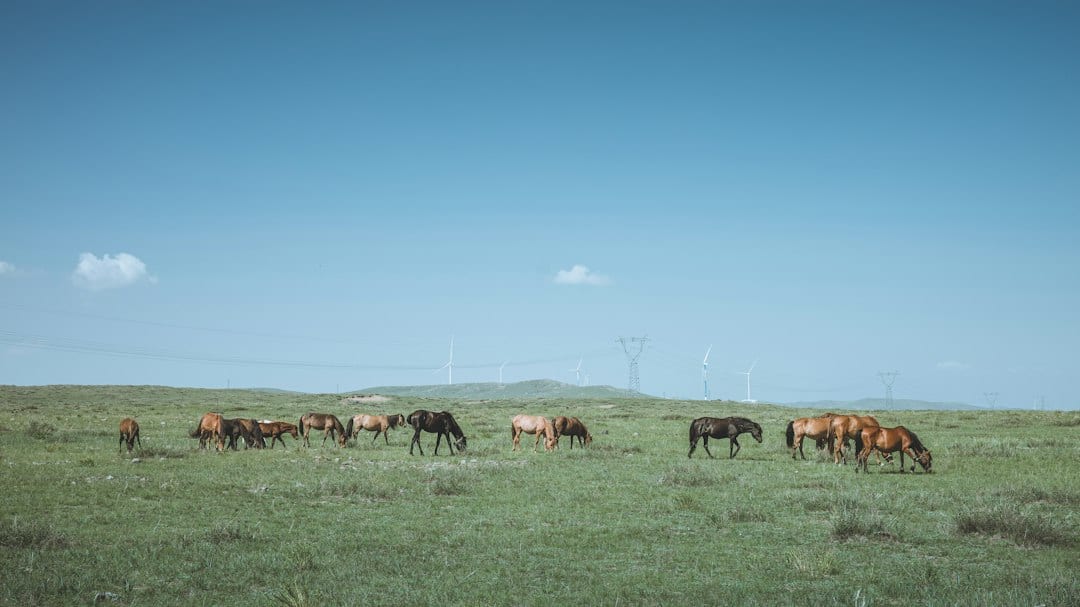
These are the athletes. Mongolian horses are small and hardy and typically live outdoors in herds for most of the year; a racehorse's conditioning is built on that life rather than on year-round stabling.
Why are the jockeys children?
Because in this tradition the rider is the horse's light, skilled partner — and children who have grown up on horseback are exactly that. Mongolian law sets a minimum age of seven for race participation, with State Naadam child jockeys aged eight to 12; despite the name "Three Manly Games," girls ride alongside boys. Many of these children have been on a horse since before they can remember; riding is not a sport they took up, it is a skill of daily life, the way city children grow up with bicycles.
The common explanation you will hear locally is practical: a lighter rider lets the horse give more of itself over a long course, and a child raised in a herding family often reads a horse better than an adult stranger would. Families invest real care and months of preparation in both the child and the horse before race day — this is not a casual afternoon outing, and treating it as one misses what the family has put into it.
There is also a layer of meaning that matters to the community. A child riding for their family and their sum (district) carries something bigger than a personal result: the family's standing, the region's pride in its horses. As we explain it to travelers, the child is respected as a skilled partner — not treated as the champion. The champion is the horse.
Is it safe? An honest answer
We won't pretend this question doesn't exist, because parents traveling with children ask us often, and it deserves a straight response rather than either a defence or a lecture.
Mongolian law addresses it directly: under the Law on National Grand Naadam, the minimum age for taking part in the races is seven, and for the State Naadam in Ulaanbaatar child jockeys must be between eight and 12, according to a 2023 statement by the UN Country Team in Mongolia. Ages for countryside races are set locally — ask your guide. At the same time, the International Labour Organization has expressed concern at the continued use of children under 18 in horse racing, considering that the sport, by its nature and the extremely hazardous conditions in which it is performed, is likely to harm children's health and safety. Both of those things are true at once: a deeply held tradition with legal safeguards, and documented risks that official bodies take seriously.
When travelers ask us about young jockeys, our role is to share that cultural context — what the ride means to the family, how the community sees the child's role — rather than to hand down a judgement on the sport's safety rules. You are welcome to hold your own view. Understanding what you are watching does not require agreeing with every part of it, and a good guest can be thoughtful and curious at the same time.
What is the chanting you hear before the race — and why we won't translate it
Before the races, spectators hear a traditional chant associated with the horses, commonly written as giingoo. We have not found an authoritative published account of its words or timing, so we will not translate or explain it here — ask your host or guide at the ground, where the telling varies by region.
What is clear is where the praise at Naadam points. In this tradition, praise is directed at the horse — its bloodline, its training, its heart over a long course — and at the family and region behind it. Winning horses are honored and titled in their own right, celebrated as achievements of a lineage and a household. The words and their meaning vary by region and family, so the best explanation comes from the people singing it — ask your host or guide at the ground.
Ask locally, and you'll get a better answer than any article
Song traditions differ between regions and families. A host at a countryside Naadam can tell you what is being sung and why far better than a blog post can — asking is a compliment, not an intrusion.
What will you actually see and hear as a spectator?
You will hear the race before you see it. Because the course crosses open country, the first sign is often a low, distant thunder of hooves carrying across the grass, then dust, then a strung-out line of horses appearing over a rise — some still strong, some visibly spent, all of them having run a long course over open ground. Expect the finish to be busy rather than tidy — horses decelerating over a long run-out, handlers moving in to catch and cool them, and families gathering around the horses that placed well. Ask your guide where to stand so you are clear of that working space.
A few things worth knowing before you stand there:
- The finish area is working space. Handlers need room to catch and cool horses; spectators belong behind the crowd line, not in the run-out.
- Placings matter beyond first. The families of placed horses carry that standing home with them — watch how the crowd greets not just the winner but the horses that ran well.
- The celebration continues after the race. Honoring a good horse involves the family and well-wishers, not a podium ceremony — linger and you will see the part television misses.
How to watch respectfully — especially around children
Most of our travelers' quiet worry is about being intrusive. Here is the concrete guidance we publish and repeat on every festival departure:
- Ask before close-up photos of people — including a jockey's family — and accept a "no" gracefully. This applies doubly to children: ask the parent or handler first, not the child.
- Stay out of competition space, including the race finish. The steppe looks open, but the working areas are clearly felt by everyone local; watch where families stand and stay behind them.
- Cheer with the crowd, never mock a fallen jockey. Applaud effort; the community certainly does.
- At a local Naadam, follow your host's lead — where to stand, when to move, when a moment is for the family rather than for cameras.
None of this is difficult. It is the same courtesy you would want a stranger to show at your child's sports day — applied on a bigger field.
Countryside race or capital ceremony — which will you remember?
Naadam is not one festival. It is hundreds. Every province (aimag) and district (soum) holds its own Naadam, sometimes on dates chosen around local occasions and pasture conditions. The stadium ceremony in Ulaanbaatar is the loudest of them; the village races are the ones we would choose for a traveler who wants to understand the sport rather than only watch it.
Here is why, as we see it. A countryside Naadam is a community measuring itself: the family whose horse places well carries that standing through the year, and everyone watching knows the horse, the child and the household behind them. When the field thunders in, the crowd is not applauding strangers — it is applauding its own. For a visitor, that changes the texture of the whole day: you are a guest at something that matters to the people around you, not an audience member at a show staged for you.
The steppe of Central Mongolia is where many of these countryside Naadams run, and it is also where family-run ger camps let you learn traditional horse riding from local nomads and taste airag (fermented mare's milk) — the same mare's-milk culture that raises the racehorses you have just watched. Spending time there before or after a race turns "I saw horses run" into "I understand what I saw." We think that is the difference between a photograph and a memory, though every traveler weighs it differently.
Why do children ride the racehorses instead of adults?
The tradition treats the rider as the horse's light, skilled partner, and children raised in herding families have ridden since early childhood. Girls ride alongside boys. The admiration goes to the horse and the family behind it — the child is respected as a skilled partner rather than treated as the champion.
How long are Naadam horse races?
They are cross-country courses across open country of up to 30 kilometres, not track or lap races. At the State Naadam the races are grouped into categories by the age of the horse; exact distances per category vary, so check the day's programme at the ground.
Is child jockeying legal in Mongolia?
The Law on National Grand Naadam sets a minimum age of seven for taking part in the races; for the State Naadam in Ulaanbaatar, child jockeys must be between eight and 12. Ages for countryside races are set locally — ask your guide. International bodies including the ILO have raised safety concerns about children in the sport, so it remains a subject of active debate.
Can I photograph the young jockeys?
Ask first — approach the parent or handler rather than the child, request permission for close-up photos, and accept a "no" gracefully. Wide shots of the racing from the spectator area are generally fine; portraits of children are a family decision.
Where can I see a countryside Naadam rather than the stadium event?
Every province (aimag) and district (soum) holds its own Naadam, sometimes on dates chosen around local occasions and pasture conditions. Central Mongolia's steppe hosts many of them; a local team can help you be in the right place at the right time, since dates shift year to year.
If you would like to watch a Naadam race with people who can explain what the crowd is reacting to — and get you to a countryside race as well as the capital's ceremony — our Wonders of July — Naadam Festival journey is built around exactly that. We are a women-led local team with over ten years of experience running private, all-inclusive journeys, with 24-hour trip assistance throughout. Tell us what you're curious about and we'll shape the trip around it.
See Naadam racing with local eyes
Questions about the races, the children, or which Naadam suits your family? Ask us anything — planning starts with a conversation, not a booking form.
Plan my trip
